Chin and cheek filler are often discussed as separate treatments, but the two areas are closely connected. The chin anchors the lower third of the face; the cheeks anchor the midface. Change one without considering the other and the result can look disproportionate rather than balanced. Treated together — or in sequence with that balance in mind — they're one of the more effective non-surgical ways to add definition to a round or softer face shape.
Chin Filler: Building Definition and Balance
Juvederm Volux is the primary product used for chin augmentation at Evolve. It's a firmer gel formulated specifically for structural support along the jawline and chin, which means it holds its shape rather than settling into a softer contour. Chin filler is typically used to correct a weak or recessed chin (sometimes called retrogenia), improve profile balance, and provide a non-surgical alternative to a chin implant for patients who want to avoid surgery.
Cheek Filler: Restoring Volume and Contour
Juvederm Voluma and Restylane Lyft are the two most commonly used products for cheek augmentation. Both are designed for deep structural support rather than surface volumizing — the goal is to restore the midface volume that's naturally present in youth or that some faces never had much of to begin with. Because the cheeks provide structural support to the lower face, restoring volume here can also soften the appearance of nasolabial folds and early jowling, even though it isn't a direct treatment for either.
How Chin and Cheek Filler Transform a Round Face
A round face shape typically reads as "soft" because of fuller cheeks and comparatively less definition along the jaw and chin. Sculpting the cheekbones with more angular, higher placement and adding projection to the chin creates a more oval, defined appearance — without surgery, and without changing the face dramatically. The goal with this combination is subtlety: enough structure to look more defined and photograph better from the side, not a different face shape entirely.
Filler vs. Surgical Options: What's the Difference?
- Filler (Juvederm Volux, Voluma, Restylane Lyft): non-surgical, reversible (HA-based, can be dissolved), results are visible immediately and continue settling over 2 weeks, minimal downtime, lasts 12–18 months.
- Surgical (chin implant, cheek implant, fat grafting): permanent, more invasive, longer recovery, generally higher upfront cost, better suited to significant skeletal deficiency that filler volume can't fully address.
For patients who want to "trial" more definition before committing to anything permanent — or who simply want a result that doesn't require surgery or downtime — filler is usually the starting point. See our full filler longevity guide for how chin and cheek filler compare to other treatment areas.
Who Is a Good Candidate for Chin and Cheek Filler?
- A recessed or weak chin, or a chin that looks small relative to the rest of the face
- Flat, hollow, or less defined cheeks
- A round face shape wanting more definition without surgery
- Realistic expectations about subtle vs. dramatic change
- In good general health, not pregnant or breastfeeding, no active infection in the treatment area
What to Expect at Your Chin and Cheek Filler Appointment
- Consultation & facial mapping: your provider evaluates chin projection, cheek volume, and overall facial proportion together, then maps a plan for one or both areas.
- Numbing: topical anesthetic is applied; both Volux and Voluma/Lyft contain lidocaine.
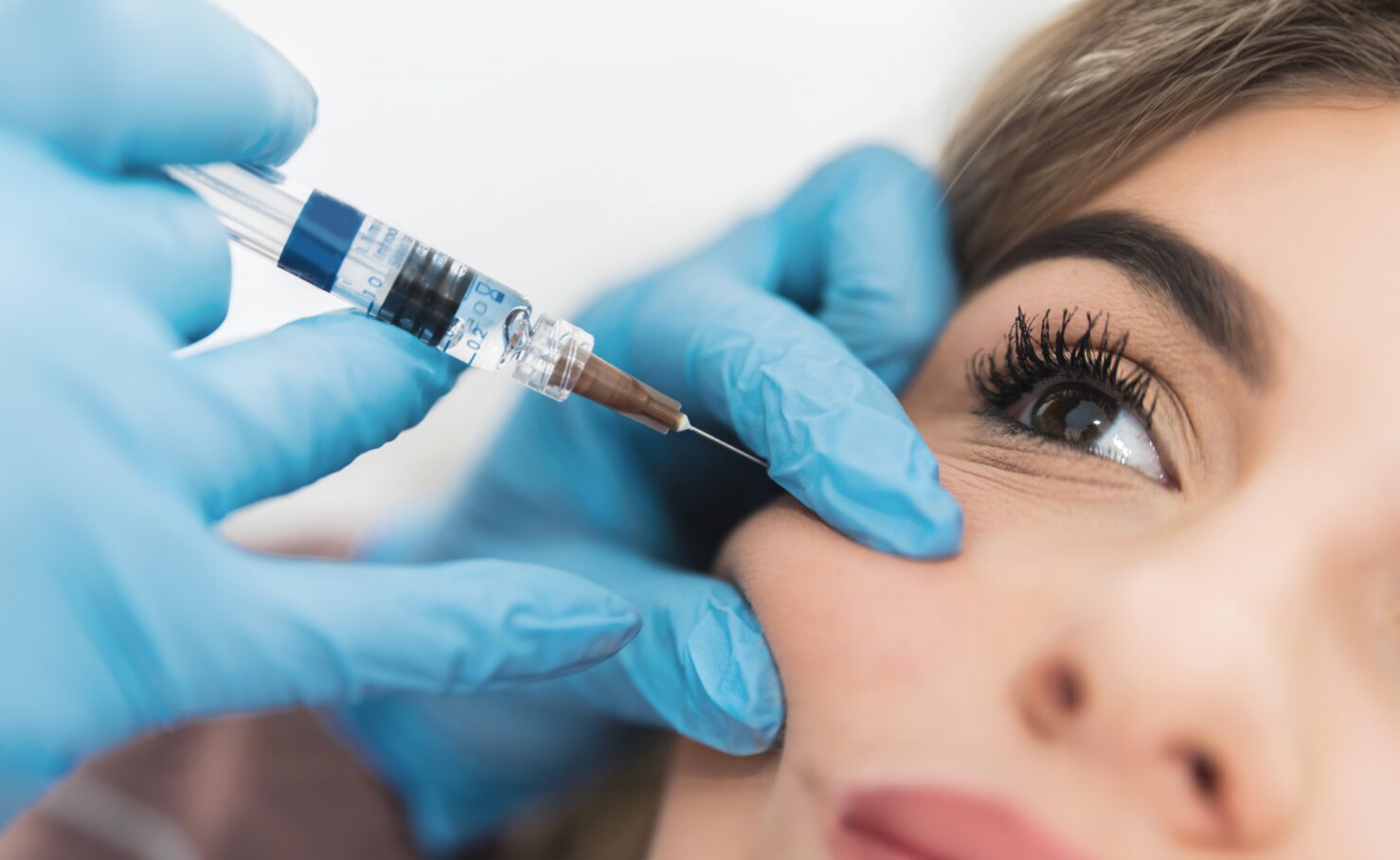
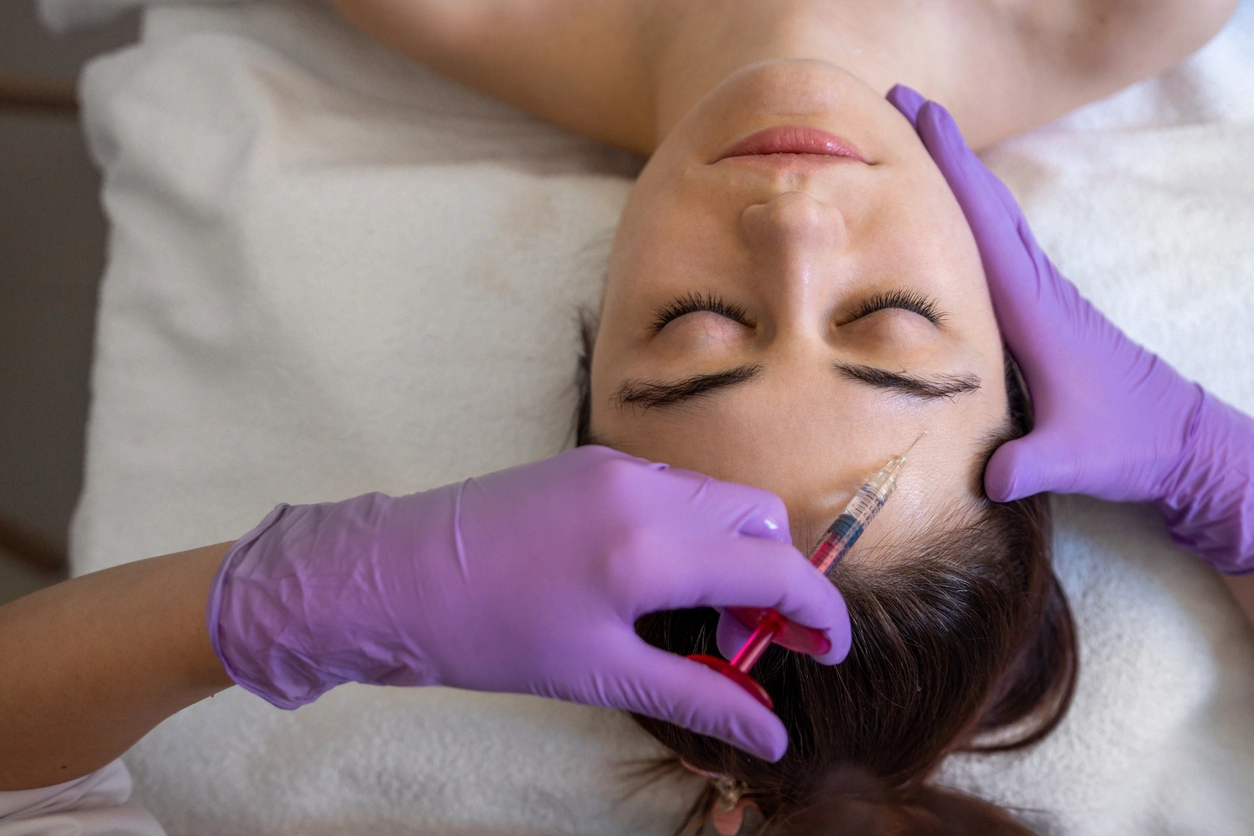
- Injection: cannula technique is common for cheeks to reduce bruising; chin filler may use needle or cannula depending on the specific correction needed.
- Review: results are visible immediately, though final settling takes about two weeks as any swelling resolves.
Appointments typically run 30–60 minutes depending on whether one or both areas are treated in the same visit. Mild swelling or bruising for 3–7 days is normal. Avoid strenuous exercise, alcohol, and excessive sun or heat exposure for 24–48 hours afterward to minimize swelling and bruising.
Can Chin and Cheek Filler Be Combined With Other Treatments?
Often, yes. Patients focused on lower-face definition sometimes pair chin and cheek filler with masseter Botox, which relaxes the jaw muscle for a slimmer lower-face profile — a complementary goal to the structural lift filler provides in the chin and cheeks. Others combine cheek filler with under-eye treatment in the same visit, since midface volume loss and under-eye hollowing are often related and can be addressed together. Your provider will discuss whether combining treatments makes sense for your specific goals and facial anatomy, rather than defaulting to a single-area plan.
How Many Syringes Are Typically Needed?
This varies by anatomy and how much correction you're looking for, but as a general framework: mild-to-moderate chin recession typically needs 1–2 syringes of Juvederm Volux, while cheek volume restoration typically starts at 1 syringe per side and can go up from there for more significant volume loss. Your provider will give you a specific recommendation and cost estimate at consultation after assessing your face in person — online guides, including this one, can only offer a general range.
Building a Long-Term Plan
Because chin and cheek filler is temporary, most patients settle into an ongoing maintenance rhythm rather than a single appointment. A touch-up around the 12–18 month mark is typical for both areas, and returning to the same provider each time means less time re-explaining your goals and anatomy at each visit. Some patients also use their first treatment as a trial for more comprehensive facial balancing before deciding whether to pursue additional areas, like the jawline or under-eyes, in future sessions.
Frequently Asked Questions
How long do chin and cheek filler results last?
Both Juvederm Volux (chin) and Juvederm Voluma or Restylane Lyft (cheeks) typically last 12–18 months before a touch-up is needed, depending on your metabolism and activity level.
Can I get chin and cheek filler in the same appointment?
Yes — treating both areas together in one visit is common, since balancing chin projection and cheek volume together tends to produce a more proportionate result than treating either area alone.
Will chin or cheek filler make my face look bigger or fuller?
Placement is structural, not just volumizing — the goal is definition, not added fullness. Your provider will discuss your specific goals and facial proportions at consultation to plan accordingly.
Is chin filler a good alternative to a chin implant?
For mild to moderate recession, yes — Juvederm Volux can provide meaningful projection without surgery. For significant skeletal deficiency, a chin implant may still be the better long-term option; your provider can advise which applies to you.
Does cheek filler help with nasolabial folds?
It can help indirectly, since restoring midface support softens the fold line somewhat. But nasolabial folds that are already prominent usually benefit from direct treatment as well — see our guide to nasolabial fold treatment options.
Chin & Cheek Filler at Evolve Med Spa
Chin and cheek filler work best as a coordinated plan, not two unrelated treatments. Book a consultation and your provider will map chin and cheek balance together based on your facial structure and goals.
Book your consultation at Evolve Med Spa.