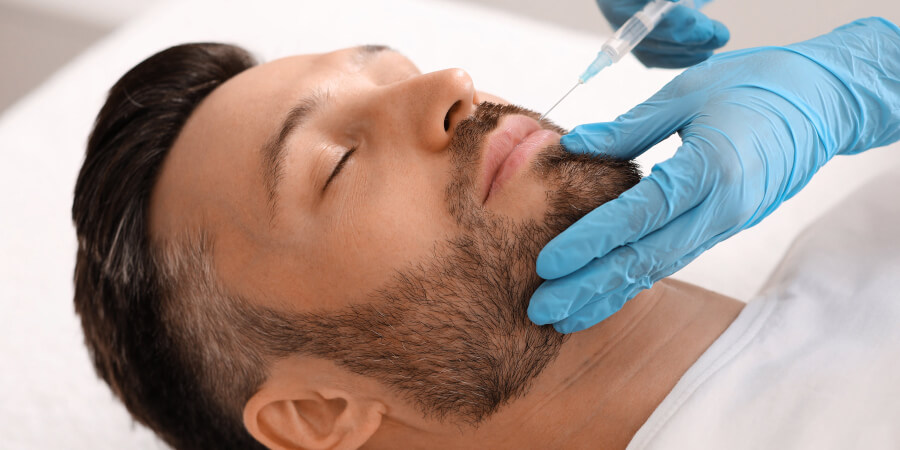
More men are walking into med spas asking about filler — not to look softer or more "done," but to look less tired, more defined, and more like a sharper version of themselves. The treatment itself uses the same FDA-approved hyaluronic acid (HA) fillers used on any patient. What changes is the anatomy being treated, the amount of product typically needed, and where it goes.
Why Are More Men Choosing Dermal Filler?
The concerns that bring men in are usually structural rather than purely cosmetic in the way filler is often marketed: a jawline that's lost definition, under-eye hollows that read as constant fatigue, or a midface that's started to flatten with age. Cosmetic treatment has also simply become a more normal conversation for men to have with a provider than it was a decade ago — less stigma, more openness about wanting to look rested and put-together for work and daily life.
How Is Filler for Men Different From Filler for Women?
Three things typically change when treating a male patient:
- More product per area: men generally have larger facial structures and thicker skin, so achieving a visible result often takes more syringes than the same treatment on a female patient.
- More conservative, structural placement: the goal is to preserve or enhance angularity — a squarer jaw, a flatter cheek plane — not round it off. Filler placed with a "more is better" volumizing approach can soften features in a way that reads as feminizing.
- Different anatomy to work around: a broader jaw, a more prominent brow bone, and thicker, more sebaceous skin all affect where product is placed and how it's expected to settle. An injector experienced with male anatomy will plan differently than they would for a female patient with the same complaint.
Which Areas Do Men Most Often Treat With Filler?
- Jawline & chin — Juvederm Volux is the most common choice here. It's a firmer, longer-lasting formulation built for structural support, used to sharpen a soft jawline or correct a recessed chin without a surgical implant.
- Cheeks — Juvederm Voluma or Restylane Lyft restore midface volume. For men, placement is angled toward structure and projection rather than the rounder, apple-cheek look sometimes requested by female patients.
- Under-eye / tear trough — Restylane-L or Belotero Balance address hollowing that reads as chronic exhaustion, one of the most common reasons men come in for a consult in the first place.
- Temples — an easy area to overlook, but temporal hollowing affects the brow and the overall frame of the face. Adding subtle volume here is often part of a broader structural plan rather than a standalone request.
How Long Does Filler for Men Last?
Longevity depends on the area treated and the product used. Jawline and chin filler typically lasts 12–18 months, cheek filler 12–18 months, and under-eye filler 9–12 months. Metabolism, activity level, and how much muscle movement happens in the treated area all affect how long results hold. See the full filler longevity guide for a breakdown by treatment area.
Who Is a Good Candidate for Men's Facial Filler?
- Noticing volume loss in the cheeks, jawline, or temples with age
- Want a more defined jawline without surgery or a chin implant
- Under-eye hollows or dark circles that skincare hasn't improved
- Want a subtle, natural-looking change — not a dramatic or obviously "filled" result
- In good general health, with no active skin infection in the treatment area
What Happens at a Men's Filler Appointment?
- Consultation & mapping: your provider assesses jawline angle, midface volume, and brow position specifically through the lens of male facial proportions, then maps injection points.
- Numbing: topical anesthetic is applied; most fillers used also contain lidocaine for comfort during injection.
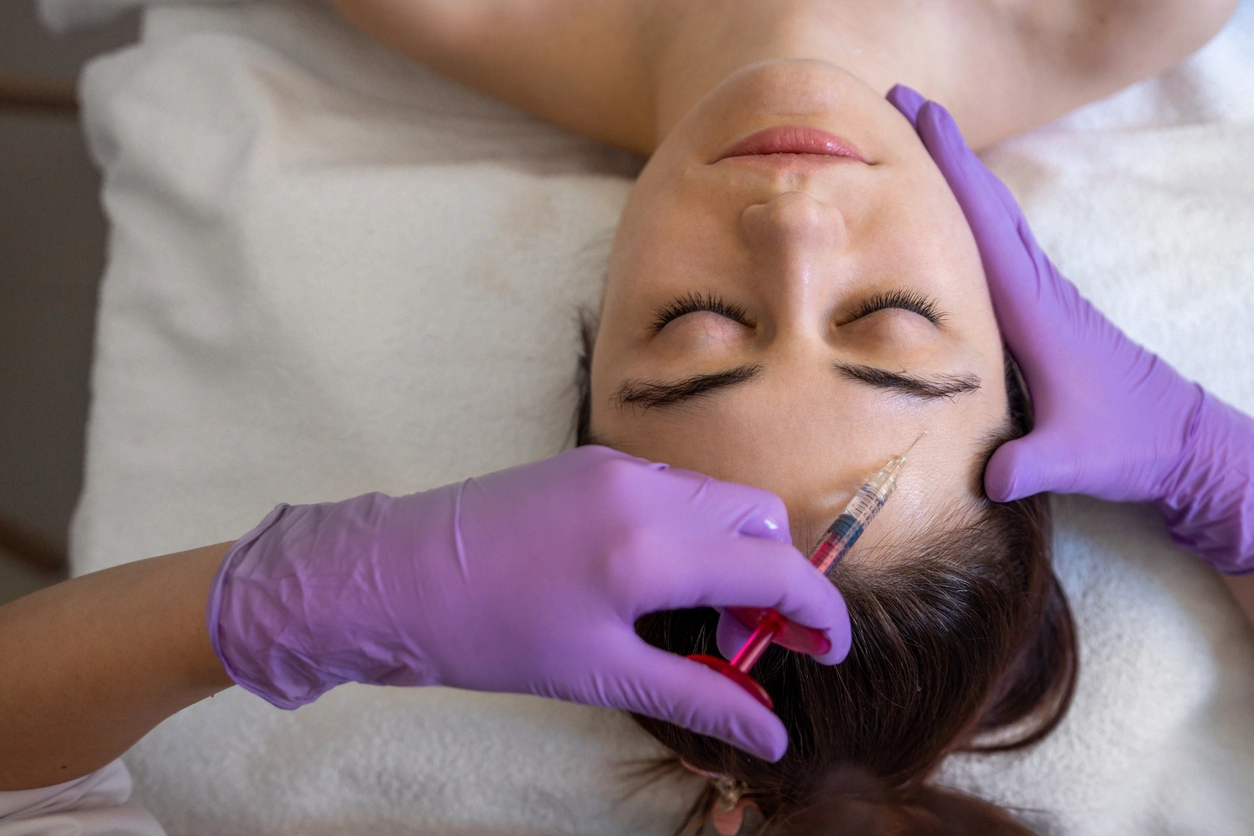
- Injection: needle or cannula technique depending on the area — cannulas are common for cheeks and under-eyes to reduce bruising risk.
- Review: you'll check the result in a mirror before leaving; minor adjustments can be made in the same session.
Appointments typically run 30–45 minutes. Mild swelling or bruising is common for 3–7 days; most patients return to normal activity the same day. Avoid strenuous exercise, alcohol, and excessive sun or heat exposure for the first 24–48 hours — all three can increase swelling and bruising.
Can Men Combine Filler With Botox?
Yes, and it's a common pairing. Filler adds volume and structure; Botox addresses movement-related lines and, for some men, can be used to slim a heavy jaw by relaxing the masseter muscle — a different goal than adding structure with chin filler, but one that's often discussed in the same consultation since both affect the lower face. Men frequently combine a jawline or cheek filler plan with Botox for the forehead or crow's feet in the same visit, since numbing and downtime overlap. Your provider will sequence treatments in the order that makes sense for your specific goals rather than treating them as separate appointments by default.
Choosing a Provider for Men's Filler
Technique matters more than product choice for male patients. Ask specifically about your injector's experience treating men — the placement decisions that preserve angularity and avoid a softened result are learned through repetition on male anatomy, not just familiarity with the products themselves. A consultation should include a real conversation about your facial structure and goals, not just a quick recommendation of "a syringe or two."
Maintaining Results Over Time
Because filler results fade gradually rather than disappearing all at once, most men settle into a maintenance rhythm rather than treating each appointment as a one-time event. A common pattern is a touch-up at the 12–18 month mark for jawline and cheek filler, and slightly sooner for under-eye treatment given its shorter longevity window. Tracking what was used and where — most practices keep this on file — makes each follow-up appointment faster, since your provider isn't starting from scratch on assessing your anatomy.
Frequently Asked Questions
Will filler make me look feminine or overdone?
Not when it's dosed and placed correctly. Conservative volumes and structural placement are used specifically to preserve masculine features like jaw angularity and brow position, rather than softening or rounding them.
How much filler do men typically need?
Often more than the average female patient — larger facial structures and thicker skin usually require additional product to achieve a visible result. Your provider will give you a specific syringe estimate at consultation based on your anatomy and goals.
Does facial filler hurt?
Most patients describe mild pressure or pinching rather than significant pain. Topical numbing is applied before injection, and most filler products contain lidocaine for added comfort.
How long is recovery after filler?
Minimal. Some swelling or bruising is common for 3–7 days, and most patients return to work the same day. Avoid strenuous exercise and alcohol for 24–48 hours to reduce swelling and bruising risk.
How long do results last?
It depends on the area: jawline and chin filler typically last 12–18 months, cheek filler 12–18 months, and under-eye filler 9–12 months. Your provider will discuss a maintenance schedule at your consultation.
Facial Filler for Men at Evolve Med Spa
Filler for men works best when it's planned around male anatomy from the start — not adapted from a treatment plan built for someone else's face. Book a consultation and we'll map a plan around your jawline, cheeks, and under-eye area.
Book your consultation at Book your men's filler consultation.ted to providing excellent care and natural-looking results. Book a consultation online or call our office today.