Mix & Match Facial Filler — Your Way. Choose your brand, customize your look. 3–10 syringes starting at $1,600. September only. Book now
Discover the regenerative power of Salmon DNA—deeply hydrating and collagen-stimulating for a lasting, natural glow. Now $75, regularly $99.
Radiesse BBL: Lift, shape, and projection without surgery. Starting at $2,750. Book now!
The wait is finally over, NYC. Come visit our new temporary home at Sola Salon (50 W 17th St). We can’t wait to see you!
Ready to fine-tune your look and feel your absolute best? Our interactive consultation is designed to make achieving your aesthetic goals effortless. Take our new treatment quiz
Fillers vs. PRF for Under Eyes: Which Rejuvenation Treatment Is Right for You?
Table of Content
✕
Table of Content
The under-eye area is one of the most delicate — and most visible — zones on the face. Dark circles, hollowing at the tear trough, crepey texture, and fine lines can all make you look tired or older regardless of how you actually feel. Treating this area requires precision, because the skin here is thinner than anywhere else on the face, with almost no subcutaneous fat buffer.
Two of the most effective treatments for under-eye rejuvenation take fundamentally different approaches: dermal fillers add immediate structural volume, while Platelet-Rich Fibrin (PRF) works by stimulating your own collagen production over time. Here's a full breakdown of how each works, what it's best for, and how to choose — or how to combine them.
Quick Comparison: Filler vs. PRF Under the Eyes
Under-Eye Filler
Under-Eye PRF
Best for
Hollow tear troughs needing immediate volume
Skin quality, dark circles, gradual collagen renewal
Results timeline
Immediate (final result in 1–2 weeks)
6–12 weeks (builds over time)
Longevity
9–12 months
12+ months; collagen changes are longer-lasting
Sessions needed
Usually 1
Series of 2–3, 4–6 weeks apart
Reversible?
Yes — dissolves with hyaluronidase
No — natural collagen; results fade gradually
Synthetic material?
Yes (hyaluronic acid)
No — 100% your own blood
Combination option
Yes — can layer PRF on top
Yes — EZ Gel adds volume + collagen stimulus
What Do Dermal Fillers Do for the Under-Eye Area?
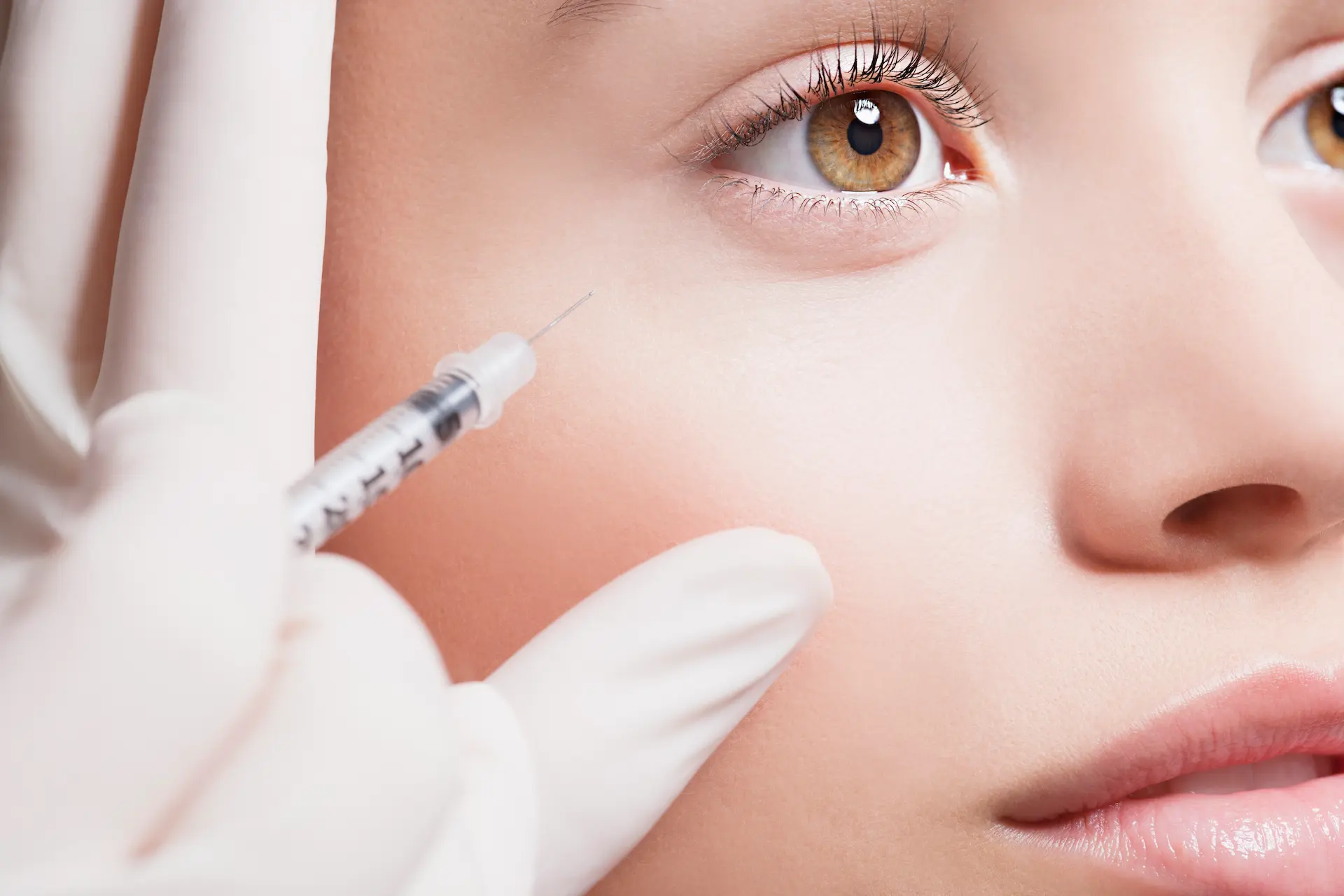
Hyaluronic acid fillers are injected directly into the tear trough — the groove between the lower eyelid and the cheek — to physically fill the hollow, reduce shadowing, and create a smoother transition from the eye to the cheek.
How Do Under-Eye Fillers Work?
Immediate volume restoration: Filler physically plumps the tear trough, instantly reducing the shadows and hollow appearance that make the eye area look sunken or tired.
Smoothing fine lines: By adding structure under the skin, filler can soften the fine lines and crepey texture in the lower eyelid area.
Improved light reflection: A filled, smoother under-eye reflects light more evenly — which directly reduces the appearance of dark circles caused by shadowing rather than pigmentation.
Softer, lower-viscosity HA formulas are used in this area given the delicacy of the skin — common options include Belotero Balance and Restylane Eyelight, both designed specifically for the tear trough. Results typically last 9–12 months. For a full longevity breakdown by product and area, see our Filler Longevity Guide.
What Are the Key Considerations for Under-Eye Filler?
Immediate results: Most patients see a noticeable improvement the same day, with final results settling over 1–2 weeks as initial swelling resolves.
Reversible: HA filler can be dissolved with hyaluronidase if needed — an important consideration for this sensitive area.
Tyndall effect risk: If filler is placed too superficially, it can create a bluish tint under the skin (the Tyndall effect). This is why choosing an injector with specific tear trough experience matters significantly.
Not for all dark circles: Filler addresses structural (hollow) and shadow-based dark circles effectively. It won't correct pigmentation-based dark circles, which require a different approach.
How Does PRF Work for Under-Eye Rejuvenation?
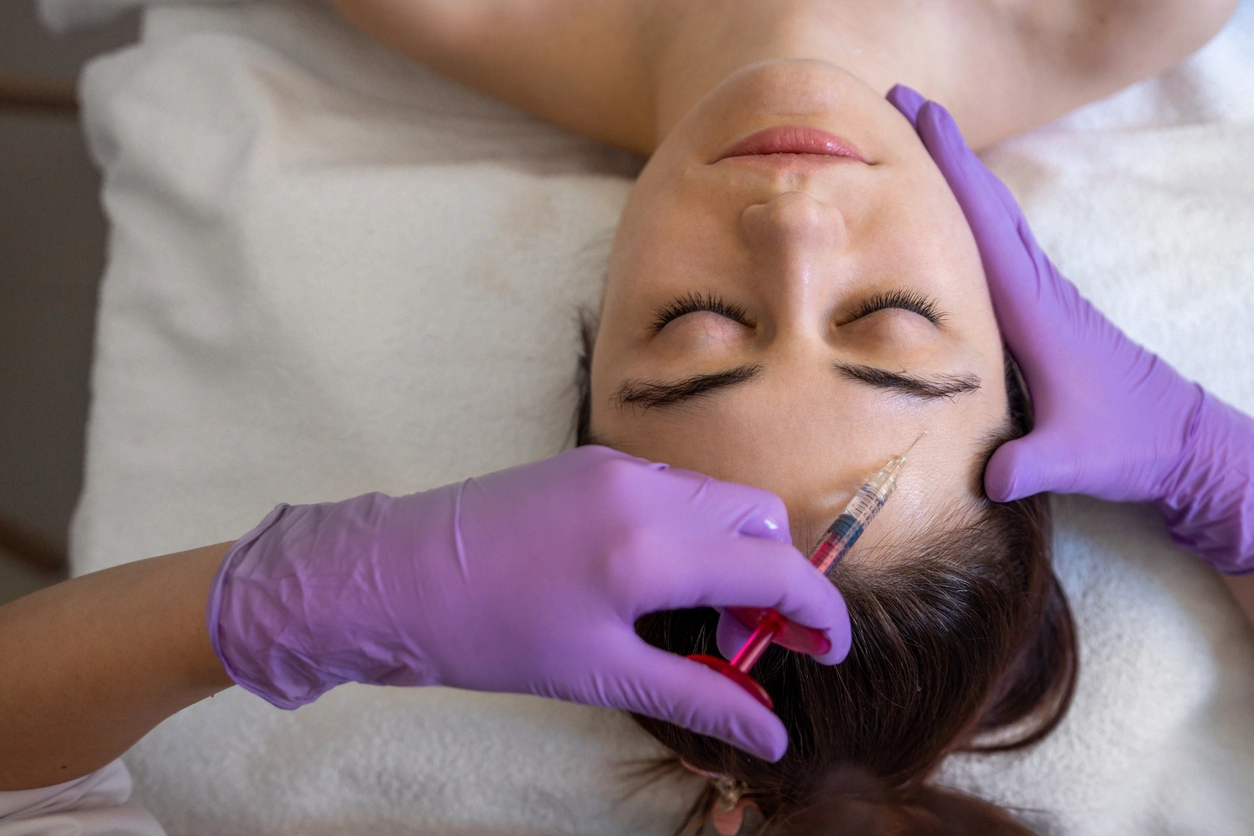
Platelet-Rich Fibrin (PRF) is an autologous treatment — it uses your own blood. A small blood draw is processed in a centrifuge at a lower speed than traditional PRP, which preserves the fibrin matrix: a natural protein scaffold that traps platelets, white blood cells, and growth factors. This concentrate is then injected into the tear trough and surrounding tissue.
How Does PRF Help the Under-Eye Area?
Stimulates collagen and elastin: The growth factors in PRF trigger the production of new collagen and elastin, gradually improving skin thickness, firmness, and elasticity — addressing the root cause of crepey, thin under-eye skin.
Sustained growth factor release: Unlike PRP, which releases its growth factors in a quick burst, PRF releases them gradually over days to weeks as the fibrin matrix slowly breaks down. For the tear trough — where you want long-term collagen remodeling — this slower release produces more cumulative results.
Improves vascular dark circles: PRF can improve local circulation, which may help reduce the purplish, vascular component of dark circles — one that filler alone can't address.
Zero synthetic material: Because PRF is made entirely from your own blood, the risk of allergic reaction or rejection is essentially zero.
What Is PRF EZ Gel — and When Is It Used?
For patients with notable hollowing at the tear trough — not just skin quality concerns — PRF can be thermally activated into a gel form called PRF EZ Gel. This converts the liquid PRF into a soft, cohesive material that provides immediate structural volume while simultaneously releasing growth factors as it's absorbed.
PRF EZ Gel gives you two things at once: the immediate volume correction of a filler and the long-term collagen stimulus of PRF — using only your own biology. It's an option that didn't exist with PRP, and it's particularly well-suited to patients who want a natural alternative to synthetic filler.
What Are the Key Considerations for Under-Eye PRF?
Gradual results: Improvements build over 6–12 weeks as collagen production is stimulated. The final result looks natural and refreshed rather than filled.
Multiple sessions recommended: A series of 2–3 treatments spaced 4–6 weeks apart delivers the best results. Maintenance sessions can extend and build on the outcome.
Best for skin quality + vascular dark circles: PRF excels at improving skin texture, hydration, and fine lines, and can reduce vascular dark circles. For structural hollowing, EZ Gel or standard filler is needed.
Minimal allergy risk: Using your own blood eliminates the risk of a foreign-body reaction — an important consideration around the sensitive eye area.
What Results Timeline Should I Expect?
Under-Eye Filler Timeline
Day of treatment: Immediate volume improvement visible (expect some swelling for 1–3 days)
Week 1–2: Swelling resolves, final result visible
Months 9–12: Results gradually fade as filler is absorbed; touch-up recommended
Under-Eye PRF Timeline (Liquid PRF)
Weeks 1–2: Injection sites settle; subtle improvement in skin hydration and tone
Weeks 3–6: Growth factors actively working — fine lines begin to soften, skin appears thicker
Months 2–3: Peak collagen remodeling; most visible skin quality improvements
Best results from a series of 2–3 sessions, 4–6 weeks apart
Under-Eye PRF EZ Gel Timeline
Days 1–3: Initial swelling peaks; volume correction visible once swelling settles
Weeks 2–4: Gel integrating with tissue; slight softening of initial volume is normal
Months 2–3: Final result — improved under-eye depth, brighter appearance, smoother texture
How Do You Choose Between Fillers and PRF?
The right choice depends primarily on what's driving your under-eye concern:
Choose filler if: You have visible hollowing at the tear trough and want immediate improvement. Filler delivers structural correction that PRF cannot replicate on its own.
Choose PRF if: Your concern is primarily skin quality — fine lines, crepey texture, or vascular dark circles — and you prefer a gradual, 100% natural approach.
Choose PRF EZ Gel if: You want immediate volume correction without synthetic filler, and you're willing to commit to a series of sessions.
Consider combining both: In many cases, filler and PRF complement each other well. Filler addresses the structural hollow immediately; PRF improves the surrounding skin quality over time. Your provider can layer PRF treatments on top of existing filler for comprehensive results.
Dark circles are also worth discussing separately: if yours are primarily pigmentation-based (hereditary, more common in deeper skin tones, consistent regardless of fatigue), injectable treatments of any kind won't fully address them. Your provider will assess whether your dark circles have a structural, vascular, or pigmentation component during your consultation.
Frequently Asked Questions
Does under-eye filler hurt?
The under-eye area is treated with topical numbing cream applied 15–20 minutes before treatment. Most patients describe the sensation as mild pressure. A fine needle or blunt cannula is used depending on the anatomy and product — cannulas tend to be more comfortable and cause less bruising in this vascular area.
Can under-eye filler make dark circles worse?
No — when placed correctly, filler reduces the shadowing that creates the appearance of dark circles. However, if filler is placed too superficially, it can cause the Tyndall effect (bluish discoloration). This is a technique-dependent risk, which is why provider experience with the tear trough specifically is important.
How many PRF sessions do I need for the under eyes?
Most patients see meaningful results with a series of 2–3 sessions spaced 4–6 weeks apart. Some patients with good initial response benefit from a single maintenance session every 12–18 months. Your provider will assess your progress after each session.
Can filler and PRF be done at the same appointment?
Yes — many providers offer combination appointments where filler addresses structural volume and PRF (Liquid or EZ Gel) is used to improve the surrounding skin quality. Your provider will discuss timing and sequencing based on your goals.
Whether you're dealing with hollowing, dark circles, fine lines, or a combination of all three, there's an effective solution — and often the best approach combines more than one treatment. Our team at Evolve Med Spa will assess your anatomy, identify what's driving your under-eye concerns, and recommend the approach most likely to give you a rested, refreshed result.
Book a consultation at Evolve Med Spa and we'll walk you through whether filler, PRF, or a combination is the right fit for your goals.nd experienced aesthetic provider like the ones at Evolve Med Spa. They can assess your individual anatomy, discuss your goals, and recommend the most suitable option for achieving a refreshed and more youthful appearance.
Medically Reviewed By
Austin Marie Jacobus RN, MSN, NP-C VP of Clinical Affairs
Let’s keep in touch! Sign up to our newsletter and receive 10% off your first treatment with us!
Explore
This website may convey general information related to medical conditions, their research, testing, and treatment, and other health care topics. Any such information is provided for informational purposes only. You should always consult with a doctor or other health care professional for medical advice or information about diagnosis and treatment.