NOTICE: Our Jersey City, NJ location has relocated as of 12/15. Visit our location page for the new address and details.
Refer a friend, and both you and the person you refer will get $50 off your visit($250 minimum purchase). Learn more!
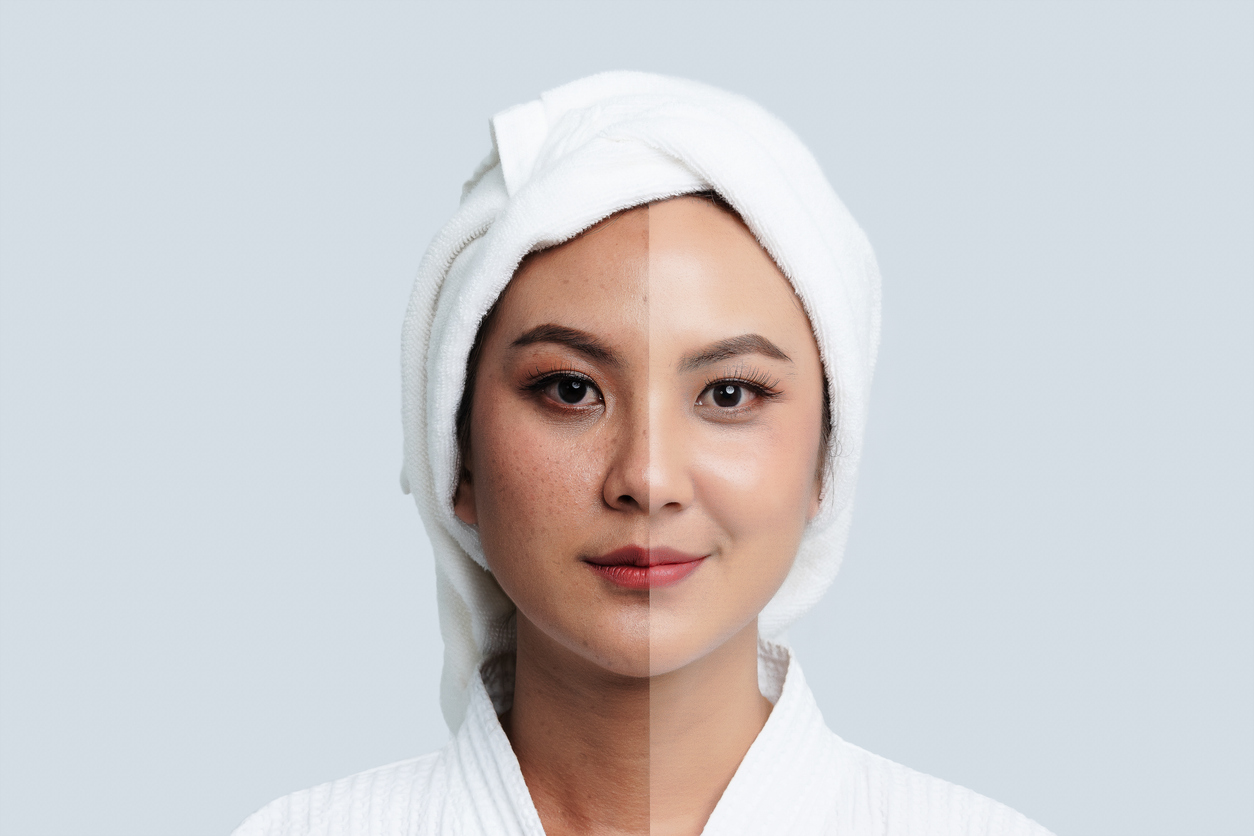
For many, the struggle with acne doesn't end when the breakouts stop; it continues with the dark spots and uneven "pitted" texture left behind. These remnants, known as Post-Inflammatory Hyperpigmentation (PIH) and atrophic scarring, can often be more frustrating than the original blemishes.
Microneedling has emerged as a premier treatment for restoring textural integrity and clearing the "ghosts" of past breakouts, providing a path toward a smooth, uniform complexion.
Acne scars—specifically the "pitted" or "rolling" variety—are essentially clusters of disorganized collagen. When the skin heals improperly from a deep blemish, it creates fibrous bands that pull the skin downward, creating an uneven surface.
The microneedling process uses medical-grade fine needles to create controlled "micro-injuries." This serves two critical purposes:
While chemical peels are excellent for surface-level brightening and light exfoliation, they often lack the depth required to treat structural damage.
Microneedling isn't a "one-and-done" fix, but rather a journey toward skin health.
Within 24 to 48 hours of treatment, the initial redness (resembling a mild sunburn) subsides, leaving the skin looking plump and fresh due to the immediate inflammatory response.
As the skin cells turn over more rapidly in response to the treatment, the dark pigment trapped in the upper layers begins to flake away, revealing a more even skin tone.
Over the course of 3 to 6 treatments, the depth of "ice pick" or "boxcar" scars begins to soften. The skin feels firmer, and the "pitted" look is replaced by a smoother, more light-reflective surface.
Because microneedling opens the skin to the environment, post-care is vital:
You don't have to settle for the lasting marks of past acne. By choosing a treatment that prioritizes textural integrity, you are teaching your skin how to heal correctly, leading to a smooth, clear, and confident future.