Mix & Match Filler — Choose your brand, customize your look. As low as $475/syr. Book Now
Refer friends right in the Evolve app — you both earn $50 in credit. Refer now
Radiesse BBL: Lift, shape, and projection without surgery. Starting at $2,750. Book now!
The wait is finally over, NYC. Come visit our new temporary home at Sola Salon (50 W 17th St). We can’t wait to see you!
Ready to fine-tune your look and feel your absolute best? Our interactive consultation is designed to make achieving your aesthetic goals effortless. Take our new treatment quiz
Photofacial vs. Chemical Peel: An Honest Comparison to Help You Decide
Table of Content
✕
Table of Content
If you're looking to address sun damage, uneven skin tone, or a dull complexion, chances are you've come across two popular treatment options: the photofacial and the chemical peel. Both are well-established, in-office treatments that can deliver meaningful improvements in skin clarity and radiance — but they work in fundamentally different ways and are best suited to different concerns.
This guide breaks down everything you need to know about both treatments, including how they work, what they treat, and how to determine which one is the right fit for your skin — or whether a combination of both might be the most effective path forward.
How Each Treatment Works
Photofacial
A photofacial is a light-based treatment that uses laser energy to target pigmentation, vascular irregularities, and other visible skin concerns beneath the surface. Unlike broad-spectrum IPL devices, the photofacial at Evolve Med Spa is delivered using the Candela GentleMax Pro — a dual-wavelength laser platform — with settings specifically calibrated to target chromophores in the skin, including melanin (responsible for dark spots and pigmentation) and oxyhemoglobin (responsible for redness and visible vessels).
The treatment works by delivering precise pulses of light energy into the skin. Targeted pigment and vascular lesions absorb this energy, break down, and are gradually cleared by the body's natural processes — revealing clearer, more even-toned skin over time. The surrounding tissue remains unaffected, and the Candela's built-in Dynamic Cooling Device (DCD) ensures the treatment remains comfortable throughout.
Chemical Peel — PCA Peel
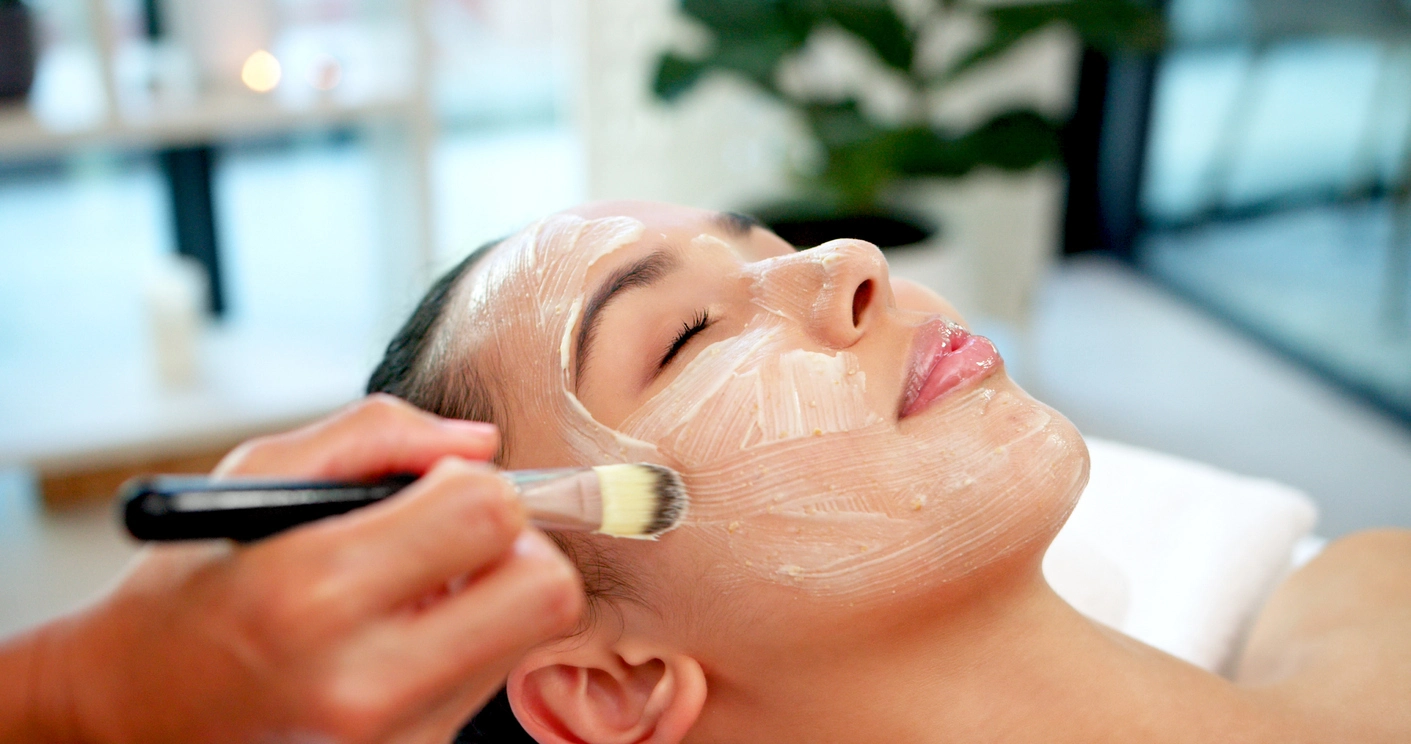
A chemical peel takes a surface-level approach. A professional-grade solution is applied to the skin, triggering controlled exfoliation of the outermost skin layers. As damaged, uneven skin sheds, fresher and more evenly pigmented skin is revealed beneath.
At Evolve Med Spa, we usePCA Peels — a highly customizable professional peel system formulated with active ingredients including alpha hydroxy acids (AHAs), beta hydroxy acids (BHAs), and brightening agents. PCA offers multiple peel formulas that can be tailored to different skin types, tones, and concerns, including options designed for sensitive skin and melanin-rich complexions.
What Each Treatment Is Best For
Photofacial Is Particularly Effective For:
Sun spots, age spots, and lentigines
Hyperpigmentation and uneven skin tone
Visible redness and facial flushing
Broken capillaries and small vascular lesions
Rosacea
Overall skin clarity and brightness
PCA Peel Is Particularly Effective For:
Dullness and lackluster skin tone
Mild to moderate hyperpigmentation
Post-acne marks and mild acne
Rough or uneven skin texture
Fine lines and early signs of aging
Dry, congested, or environmentally stressed skin
Comparing the Two Treatments Side by Side
Photofacial
PCA Peel
How it works
Targeted light energy beneath the skin
Chemical exfoliation of the skin's surface
Primary mechanism
Breaks down pigment and vascular targets
Accelerates cell turnover and skin renewal
Best for
Sun damage, redness, vascular concerns
Dullness, texture, mild pigmentation, fine lines
Skin tone suitability
Best for lighter to medium skin tones
All skin types (formulas vary by type)
Downtime
Minimal — mild redness, possible darkening of spots
Mild to moderate — 3 to 7 days of peeling
Comfort level
High — built-in cooling system
Mild tingling or warmth during application
Sessions needed
3 to 5 recommended
1 to 6 depending on concern and depth
Results timeline
Gradual clearing over 1 to 2 weeks per session
Initial glow within days; full results after peeling
Can be combined?
Yes
Yes
An Important Note on Skin Tone
One meaningful distinction between these two treatments relates to skin tone suitability — particularly for patients with medium to deep complexions.
Photofacials work by targeting melanin in the skin. In patients with darker skin tones, there is a higher risk of the laser energy being absorbed by the skin's background pigment rather than solely by the targeted lesion, which can increase the risk of post-inflammatory hyperpigmentation or temporary lightening of surrounding skin. For this reason, photofacials are generally most appropriate for patients with lighter to medium skin tones, and careful provider assessment is essential before treatment.
PCA Peels, by contrast, offer formulations specifically developed for melanin-rich skin types, making them a more versatile option across the full range of skin tones when the correct formula is selected.
If you have a medium to deep skin tone and are unsure which treatment is appropriate for you, a consultation with one of our providers is the most important first step.
What Happens After Treatment
Photofacial: Most patients experience mild redness immediately following a photofacial, similar to a light sunburn, which typically resolves within a few hours. Dark spots and pigmented lesions may temporarily appear darker in the days following treatment — this is a normal and expected part of the process, as the targeted pigment rises to the surface before flaking away. Most patients see noticeable clearing within 1 to 2 weeks of each session.
PCA Peel: The recovery experience after a chemical peel is more visible. Peeling typically begins 2 to 3 days after treatment and may continue through day 5 to 7. Skin may appear flaky, tight, or temporarily uneven during this window. While the process is entirely normal, it does require some planning around social or professional commitments. Keeping skin moisturized and avoiding picking or peeling skin manually is essential to achieving the best outcome.
Can You Combine a Photofacial and a Chemical Peel?
Yes — for patients with multiple skin concerns, particularly those dealing with both pigmentation and overall texture or tone issues, a combination approach can address different layers of the skin more comprehensively than either treatment alone.
Because both treatments increase skin sensitivity, they are not performed on the same day. Your provider at Evolve Med Spa will help you determine the right sequencing and spacing to maximize results safely.
Which Treatment Is Right for You?
Both the photofacial and the PCA Peel are clinically proven treatments — the right choice comes down to your specific skin concerns, your skin tone, and your lifestyle.
Consider a photofacial if your primary concerns are sun spots, visible redness, broken capillaries, rosacea, or significant pigmentation — and you have a lighter to medium skin tone with minimal downtime availability.
Consider a PCA Peel if your primary concerns are dullness, uneven texture, mild pigmentation, post-acne marks, or fine lines — or if you have a deeper skin tone that may not be the best candidate for light-based pigmentation treatments.
Consider both if you want to address pigmentation at multiple levels — using the photofacial to target deeper chromophores and the PCA Peel to resurface and brighten the skin's outer layers over a series of treatments.
As always, the most reliable way to determine the right treatment is a thorough consultation with a qualified provider who can assess your skin in person.
Ready to Find Out Which Treatment Is Right for You?
Whether you're drawn to the photofacial, the PCA Peel, or a combination of both, the most important next step is a personalized consultation with our team at Evolve Med Spa. We'll evaluate your skin, discuss your goals, and build a treatment plan designed specifically for you.
Let’s keep in touch! Sign up to our newsletter and receive 10% off your first treatment with us!
Explore
This website may convey general information related to medical conditions, their research, testing, and treatment, and other health care topics. Any such information is provided for informational purposes only. You should always consult with a doctor or other health care professional for medical advice or information about diagnosis and treatment.