Mix & Match Filler — Choose your brand, customize your look. As low as $475/syr. Book Now
Refer friends right in the Evolve app — you both earn $50 in credit. Refer now
Radiesse BBL: Lift, shape, and projection without surgery. Starting at $2,750. Book now!
The wait is finally over, NYC. Come visit our new temporary home at Sola Salon (50 W 17th St). We can’t wait to see you!
Ready to fine-tune your look and feel your absolute best? Our interactive consultation is designed to make achieving your aesthetic goals effortless. Take our new treatment quiz
Relfydess and TrenibotE: What Are These New Wrinkle Relaxers and How Do They Compare to Botox, Dysport, and Xeomin?
Table of Content
✕
Table of Content
The wrinkle relaxer market has been dominated by a small group of names for decades — Botox, Dysport, Xeomin, and more recently Jeuveau and Letybo. But two new entrants are generating serious attention in the aesthetics space: Relfydess (relabotulinumtoxinA), a ready-to-use liquid botulinum toxin developed by Galderma, and TrenibotE, a next-generation botulinum toxin type E in clinical development. Neither is currently offered at Evolve Med Spa — and for good reason. Our approach has always been to evaluate new treatments against a high clinical standard before making them available to patients.
That said, the aesthetics industry moves fast, and educated patients deserve an honest, up-to-date breakdown of what these products are, what the research shows, and how they stack up against the proven toxins our providers use every day. Here is everything we know.
What Is Relfydess and How Is It Different from Traditional Botox?
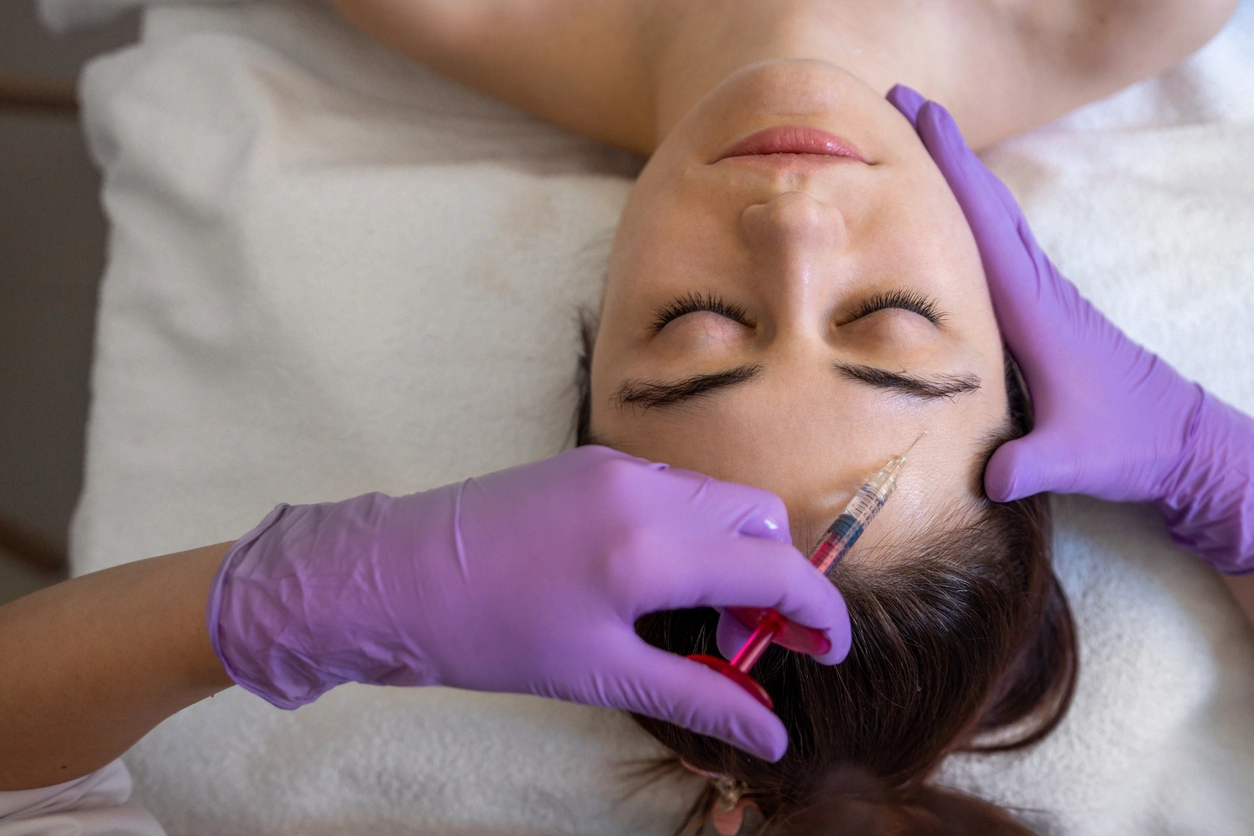
Relfydess (relabotulinumtoxinA) is a botulinum toxin type A injectable developed by Galderma — the same company behind Restylane fillers and Sculptra. What sets it apart is its formulation: Relfydess is a ready-to-use liquid that requires no reconstitution before injection. Traditional botulinum toxins — including Botox, Dysport, and Xeomin — are supplied as freeze-dried powders that providers must dilute with saline prior to use. Relfydess arrives pre-mixed and standardized at a consistent concentration, eliminating that variable. Like all other toxins, it is administered by injection with a needle — it is not a topical or needle-free product.
Galderma developed Relfydess using its proprietary PEARL Technology, designed to preserve molecule integrity during manufacturing and storage. The company positions this as an advantage for consistency — removing the dilution variable that can affect diffusion, concentration, and results across different practices and providers.
Key clinical characteristics of Relfydess based on published phase III data from the READY clinical program, which enrolled over 1,900 participants across four trials:
Botulinum toxin type A — same mechanism of action as Botox and Dysport
Ready-to-use liquid formulation — no reconstitution required, standardized concentration every time
Studied in the glabellar (11 lines) and lateral canthal lines (crow's feet) regions
Onset of action as early as Day 1 — notably faster than the 3-7 day onset typical of Botox
Duration of approximately 6 months for frown lines and crow's feet — roughly double the 3-4 month average for standard Botox dosing
Regulatory status: Relfydess has been approved in over 20 international markets including the European Union, United Kingdom, Australia, and parts of Asia. In the United States, Galderma resubmitted its Biologics License Application (BLA) — the FDA's regulatory pathway for biological injectables — and the FDA formally accepted that resubmission for review on February 2, 2026. Acceptance for review is not the same as approval — Relfydess remains an investigational product in the U.S. until the FDA completes its evaluation and issues a decision.
What Is TrenibotE and Why Is It Generating Interest in Aesthetics?
TrenibotE is a botulinum toxin type E — and that distinction matters clinically. The seven known serotypes of botulinum toxin (A through G) differ in how they cleave the proteins responsible for neuromuscular signaling. Types A and B are the only serotypes currently used therapeutically. Type E has not previously been developed for aesthetic use.
The reason TrenibotE is generating interest: botulinum toxin type E has a significantly shorter duration of action than type A — measured in days to weeks rather than months. For some patients and providers, this is actually a feature rather than a drawback:
Patients who have experienced adverse effects from type A toxins — such as brow ptosis or asymmetry — would have a much shorter window of unwanted effect
It may allow for more frequent, smaller micro-dosing treatments for patients who prefer a continuously maintained result over a periodic one
For first-time patients anxious about committing to 3-4 months of effect, a shorter-duration toxin lowers the psychological barrier to entry
That said, the short duration is also a significant practical limitation. A treatment requiring repeat visits every two to four weeks would represent a meaningfully different patient experience and cost structure than the quarterly cadence most patients are accustomed to. TrenibotE remains in clinical development and has not received FDA approval for cosmetic use. It is worth monitoring, but it is not a replacement for type A toxins for the majority of patients.
How Do Relfydess and TrenibotE Compare to Botox, Dysport, and Xeomin?
Here is a direct comparison across the most clinically relevant variables:
Botox
Dysport
Xeomin
Relfydess
TrenibotE
Toxin Type
Type A
Type A
Type A
Type A
Type E
Formulation
Freeze-dried powder
Freeze-dried powder
Freeze-dried powder
Ready-to-use liquid — no reconstitution
In development
U.S. FDA Status
Approved (2002)
Approved (2009)
Approved (2011)
BLA under review — investigational in U.S.
Not approved — early clinical stage
International Approval
Widely approved globally
Widely approved globally
Widely approved globally
Approved in 20+ markets (EU, UK, AU, Asia)
Not approved
Onset
3-7 days
2-5 days
3-7 days
As early as Day 1 (phase III data)
Hours to days (early data)
Duration
3-4 months avg
3-4 months avg
3-4 months avg
~6 months (phase III data)
2-4 weeks
Complexing Proteins
Yes
Yes
No (naked toxin)
No (PEARL Technology)
N/A
Real-world Safety Data
20+ years
15+ years
10+ years
Phase III trials only in U.S.
Early-phase only
Available at Evolve
Yes
Yes
Yes
No
No
All duration and onset figures for Relfydess reflect published phase III READY trial data. Real-world outcomes post-approval may differ. TrenibotE figures are based on early-phase research. Established toxin data reflects typical clinical experience across Evolve Med Spa providers.
Does a Longer Duration Mean Relfydess Is Better Than Botox?
Not necessarily — and this is an important nuance. A 6-month duration sounds appealing on paper, but longevity alone is not the measure of a superior product. Several clinical considerations apply:
Longer duration means a longer window for any side effect, including asymmetry, brow heaviness, or unexpected spread. With established toxins, most of these resolve in 6-10 weeks. With a 6-month product, recovery takes significantly longer.
The 6-month duration data comes from controlled phase III trials under highly standardized conditions that may not reflect the variability of real-world practice. Post-approval data will tell a fuller story.
Patients whose aesthetic goals evolve benefit from the shorter reset that comes with a 3-4 month cycle. More frequent appointments also create more touchpoints for providers to refine technique and adapt to subtle anatomical changes over time.
Bottom line: longer duration is a meaningful data point, not a definitive advantage. If you have ever felt that your results faded sooner than expected, that is almost always a dosing and technique issue worth discussing with your provider — not necessarily a reason to seek a different product. Learn more about why Botox sometimes does not perform as expected.
Why Does Evolve Med Spa Not Currently Offer Relfydess or TrenibotE?
The short answer is that our clinical standards require a body of evidence that neither product has fully established yet in the United States.
Botox has over 20 years of aesthetic use data. Dysport has 15 years. Xeomin has a clean safety profile supported by a decade of clinical use and the advantage of containing no complexing proteins. These are the products our clinical team has trained on extensively, understands deeply, and can deliver with predictable outcomes across all 14 of our locations.
This does not mean we are not watching. Evolve's clinical leadership actively monitors emerging treatments, regulatory developments, and post-market safety data for all new aesthetic products. Relfydess's FDA BLA acceptance for review in February 2026 is a significant milestone — we will follow its review closely. When the evidence base and our team's training meet our standard, we will evaluate adding it to our offering and communicate that to patients directly.
Patients seeking new-to-market treatments from providers who have not fully trained on them yet are accepting a risk that is not necessary. There is no clinical advantage to being the first to offer a product before robust real-world U.S. data exists.
What Makes Botox, Dysport, and Xeomin the Right Choice for Most Patients Today?
The three toxins Evolve currently offers — Botox, Dysport, and Xeomin — cover the full spectrum of patient needs when selected and dosed correctly by an experienced provider:
Botox is the most studied aesthetic neuromodulator in history. It is the reference standard against which every new toxin is measured. For patients who want predictable, proven results, it remains the default.
Dysport diffuses slightly more broadly than Botox at equivalent doses, making it particularly well-suited for larger treatment areas like the forehead. Its faster onset — often 2-5 days versus 3-7 for Botox — is valued by patients who want quicker visible results.
Xeomin contains no accessory complexing proteins, making it a strong choice for patients who have received multiple rounds of Botox and want to minimize the theoretical risk of antibody neutralization — sometimes cited in patients who feel their Botox has become progressively less effective.
Not sure which toxin is right for you? Read our comparison of Letybo vs. Botox for a sense of how we evaluate newer entrants against established standards — the same framework applies when assessing Relfydess once U.S. approval is granted.
What Should Patients Do If They Are Curious About Trying Relfydess or TrenibotE?
The most important first step is having an honest conversation with a qualified provider — not seeking out the newest product simply because it is new. Here is what we recommend:
If you are currently happy with your results from Botox, Dysport, or Xeomin, there is no clinical reason to switch. Results that look natural and last are the goal, and your current toxin is already delivering that.
If you feel your results are not lasting as long as they should, the answer is almost always a dosing adjustment or technique refinement — not a product change. Discuss this at your next appointment.
If you are genuinely curious about Relfydess once it receives U.S. FDA approval and accumulates real-world post-market data, that is a reasonable conversation to revisit at that point.
TrenibotE remains a research-stage product. We recommend monitoring its development but not making clinical decisions based on early-phase trial data alone.
Frequently Asked Questions About Relfydess, TrenibotE, and New Wrinkle Relaxers
Is Relfydess FDA approved in the United States?
Not yet as of February 2026. Galderma submitted a Biologics License Application (BLA) resubmission, which the FDA accepted for review in February 2026 — meaning the agency agreed to evaluate the application, not that it has been approved. Relfydess is currently approved in over 20 international markets including the EU, UK, Australia, and parts of Asia, but remains an investigational product in the U.S. pending an FDA decision.
What does Biologics License Application mean and why does it matter?
A Biologics License Application (BLA) is the regulatory pathway the FDA uses to review biological products — including all botulinum toxins — before they can be marketed in the United States. It is the biological equivalent of a New Drug Application for standard pharmaceuticals, requiring the same rigorous safety and efficacy review. FDA acceptance of a BLA resubmission means the agency confirmed the application is complete and will be formally reviewed — it is not an approval decision.
How is Relfydess different from Botox?
Both are botulinum toxin type A products injected with a needle to temporarily relax the muscles responsible for expression lines. The primary differences are: formulation (Relfydess is a ready-to-use liquid requiring no reconstitution; Botox is a freeze-dried powder that must be diluted before use), reported onset (as early as Day 1 for Relfydess versus 3-7 days for Botox), reported duration (approximately 6 months for Relfydess versus 3-4 months for Botox in clinical trials), and depth of real-world safety data (Botox has 20+ years; Relfydess has phase III trial data only in the U.S.).
What is botulinum toxin type E and why does it matter for aesthetics?
Botulinum toxin type E is a different serotype from the type A toxins currently used in aesthetics. Type E cleaves a different target protein in the neuromuscular junction and is processed more rapidly by the body, resulting in a much shorter duration of action — days to weeks rather than months. TrenibotE is the first type E toxin being developed for cosmetic use. It is not FDA approved and remains in early clinical development.
Does a 6-month duration toxin mean fewer treatments per year?
In theory, yes — approximately two treatments per year instead of three to four. However, phase III duration data does not always translate directly to real-world results, and longer duration also means a longer window for any unwanted effects. Most patients at Evolve Med Spa find that a quarterly schedule keeps results looking naturally consistent rather than cycling through visible peaks and fadeouts.
Will Evolve Med Spa add Relfydess when it receives U.S. FDA approval?
We are actively monitoring Relfydess's FDA review and following post-market performance data from the 20+ markets where it is already approved. Our standard before adding any new treatment is sufficient post-market evidence, proper provider training, and a confident answer to: does this deliver a meaningfully better outcome for our patients? We will communicate openly when that standard is met.
Is Xeomin better than Botox for patients who feel they have developed resistance?
Xeomin is a pure botulinum toxin with no accessory complexing proteins, which theoretically reduces the likelihood of the immune response that can lead to antibody formation and reduced effectiveness over time. For patients who feel their Botox results have become progressively weaker across multiple treatment cycles, switching to Xeomin is a clinically reasonable consideration worth discussing with your Evolve provider.
How do I know which wrinkle relaxer is right for me?
The best wrinkle relaxer is the one your experienced provider selects based on your anatomy, treatment history, goals, and the specific areas being treated — not the one generating the most marketing attention at a given moment. A thorough consultation at Evolve Med Spa is the most reliable answer to this question.
Have questions about which wrinkle relaxer is right for you — or want to understand how your current treatment compares to what is emerging? Our providers stay ahead of the science so you do not have to. Book a consultation at Evolve Med Spa and get an honest, expert answer.
Medically Reviewed By
Austin Marie Jacobus RN, MSN, NP-C VP of Clinical Affairs
Let’s keep in touch! Sign up to our newsletter and receive 10% off your first treatment with us!
Explore
This website may convey general information related to medical conditions, their research, testing, and treatment, and other health care topics. Any such information is provided for informational purposes only. You should always consult with a doctor or other health care professional for medical advice or information about diagnosis and treatment.