Not all injectable treatments work the same way. While hyaluronic acid fillers add immediate volume, Sculptra takes a fundamentally different approach — it works from the inside out by stimulating your body's own collagen production. The results are subtler at first, but they're also longer-lasting and more natural-looking than almost any other injectable available. Here's everything you need to know about Sculptra: how it works, who it's right for, what the treatment process looks like, and what results you can realistically expect.
What Is Sculptra and How Is It Different from Regular Fillers?
Sculptra (poly-L-lactic acid, or PLLA) is an FDA-approved injectable biostimulator — not a traditional dermal filler. Rather than physically plumping an area with gel, Sculptra works by triggering your skin's collagen synthesis response. The poly-L-lactic acid microparticles are gradually absorbed by the body, and as they break down, they stimulate fibroblasts to generate new structural collagen.
The key distinction: traditional HA fillers give immediate results that fade over six to eighteen months. Sculptra builds volume gradually and can last two or more years. For patients who want natural-looking, long-term improvement — rather than a quick fix — that difference matters significantly.
Sculptra is particularly well-suited for: patients seeking natural-looking, gradual improvement; long-term volume restoration in areas like the temples, cheeks, and jawline; and an alternative to surgery for significant volume loss without the recovery.
How Does Sculptra Actually Rebuild the Face?
To understand why Sculptra produces results that outlast traditional fillers, it helps to understand what it's actually doing in the tissue.
As we age, we lose collagen, fat, and even bone density in the face. This structural loss is what causes hollow temples, flattened cheeks, deepening folds, and sagging skin. Traditional HA fillers address the symptom by adding gel volume directly — but when the filler is absorbed, you're back to the same structural deficit.
Sculptra addresses the root cause. The PLLA microparticles are injected deep into the tissue, where they act as a scaffold — triggering your body's wound-healing response and stimulating the production of Type 1 collagen, the strongest structural protein in the skin. Because the results are built from your own collagen, they behave exactly like your natural tissue: flexible, natural-looking, and durable. This is why the transformation looks so subtle and gradual — it is your skin that's changing, not a foreign material sitting under it.
What Areas of the Face Can Sculptra Treat?
Sculptra is best suited for areas of the face that lose fat and structural support with age — particularly zones where diffuse volume restoration produces a better result than spot-filling:
- Temples: One of the earliest areas to hollow with age. Temple volume loss creates a skeletonized, aged appearance; Sculptra restores the gentle convexity that makes the face look youthful and full.
- Cheeks and midface: Restoring the lifted, rounded 'apple cheek' look by rebuilding the structural fat pad volume that descends with age. This often produces a secondary lifting effect on the nasolabial folds and lower face.
- Jawline and lower face: Improving definition and addressing early jowling by restoring structural support through the lower face.
- Nasolabial folds and marionette lines: Sculptra approaches these differently than HA filler — rather than filling the crease directly, it restores the underlying midface volume that's causing the fold to deepen.
- Chin: Adding structure and support to the chin for improved profile balance.
Sculptra can also be used off-label for body contouring, most notably the non-surgical Brazilian Butt Lift. See our guide to liquid BBL with Sculptra for more on body applications.
Who Is a Good Candidate for Sculptra?
Sculptra tends to work best for patients who:
- Are experiencing early-to-moderate facial volume loss across multiple areas — temples, cheeks, jawline — rather than a single isolated fold
- Want gradual, natural-looking improvement that doesn't signal obvious treatment to others
- Are looking for results that outlast standard HA fillers without requiring surgery
- Are comfortable with a multi-session treatment series and a 3–6 month timeline to full results
- Want to invest in long-term skin quality alongside volume — Sculptra also improves skin thickness and firmness over time
Sculptra may not be the best first choice if you want immediate, dramatic results for a specific event, or if you have a localized concern (like a single deep line) that a targeted HA filler can address directly. In those cases, HA filler may be a better starting point — and Sculptra can be layered in for long-term maintenance.
How Many Sculptra Treatments Are Needed?
Most patients require a series of two to four treatment sessions, spaced four to six weeks apart. The exact number depends on the degree of volume loss, the treatment areas, and your individual goals. Your provider at Evolve Med Spa will assess your facial anatomy during a consultation and recommend a treatment plan tailored to your needs.
A useful benchmark: many providers follow a guideline of roughly one vial per decade of age per session — though this varies significantly based on anatomy and goals. Your provider will give you a precise recommendation during your consultation.
What Happens During a Sculptra Treatment Appointment?
Sculptra injections follow a systematic process designed for comfort and precision:
- A topical numbing cream is applied 30–45 minutes before treatment
- Injection sites are marked based on your facial anatomy and treatment plan
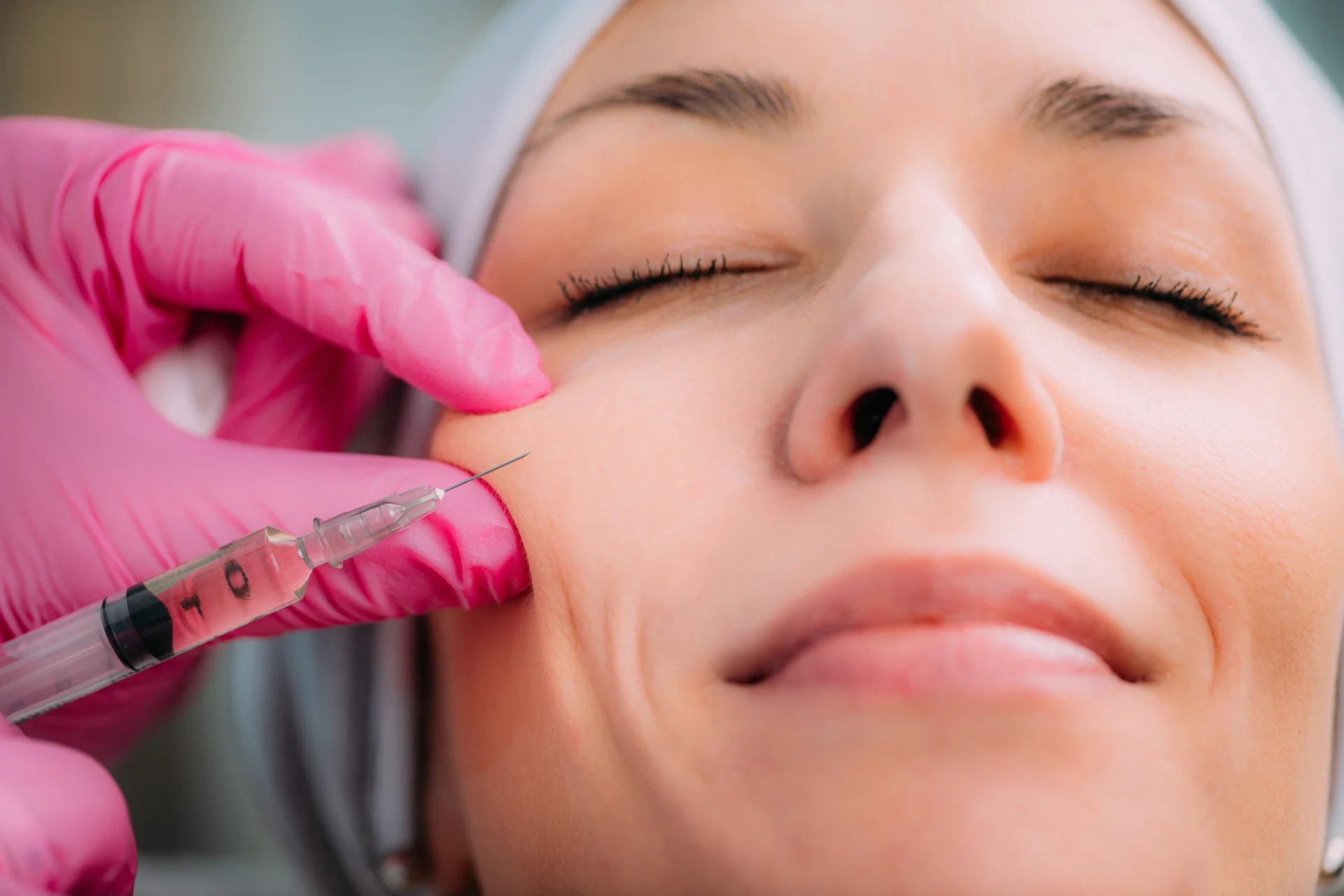
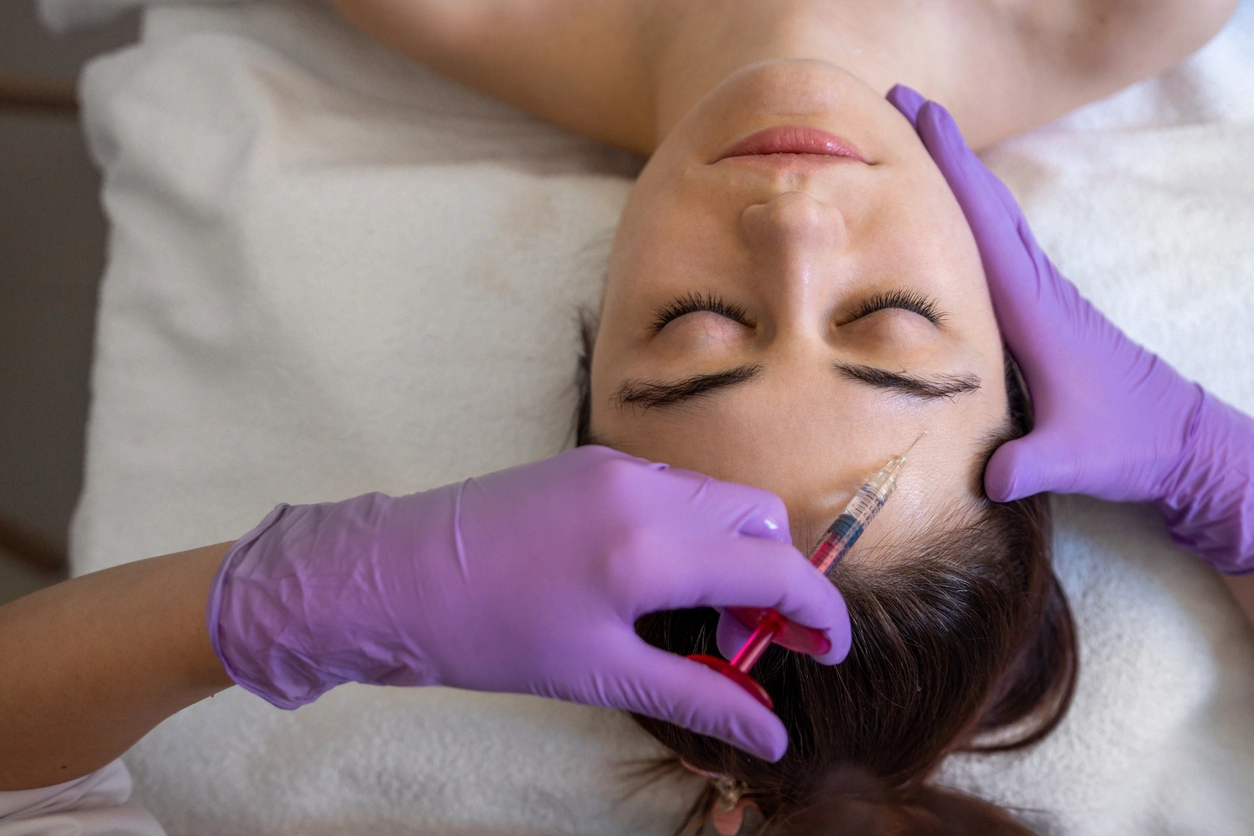
- Sculptra is injected into the deep dermis or subcutaneous tissue using a fine needle or cannula
- The area is massaged immediately after injection to distribute the product evenly — this is critical for preventing uneven results
The 5-2-2 massage rule: After each session, patients are instructed to massage treated areas for 5 minutes, 2 times per day, for 2 days. This helps the product distribute evenly and significantly reduces the risk of nodule formation.
You'll notice some temporary swelling immediately after injection that creates a preview of potential results — this resolves within 24–48 hours and doesn't represent the final outcome. Some bruising at injection sites is normal and typically clears within a few days to a week.
When Do Sculptra Results Appear?
Sculptra results are not immediate. Because the product works by stimulating collagen, visible improvement develops gradually over two to six months after each session. Most patients begin to notice subtle changes at around six to eight weeks, with the full results of a treatment series visible at approximately six months after the final session.
This gradual onset is one of Sculptra's most appealing qualities for many patients: the transformation is entirely natural-looking. There's no overnight change that signals to others that you've had a procedure. Instead, you simply look like a refreshed, more rested version of yourself — which is the goal.
How Long Does Sculptra Last?
Results from a full Sculptra treatment series can last two or more years for most patients. Because the product stimulates genuine structural collagen — real tissue in your own skin — the results are more durable than those from HA fillers. Compare this to our Filler Longevity Guide: even the longest-lasting HA fillers top out at 18 months in structural areas. Maintenance treatments are typically recommended every 18–24 months to sustain and build on results.
How Much Does Sculptra Cost?
Sculptra is priced per vial. A full treatment series generally requires two to four vials per session across two to four sessions. The total number of vials depends on the degree of volume loss and how many areas are being treated. During your consultation at Evolve Med Spa, your provider will give you a precise cost estimate based on your anatomy and goals.
Many patients find that Sculptra's cost-per-year is comparable to — or lower than — maintaining regular HA filler treatments. When you factor in that Sculptra results last two or more years versus 6–18 months for most HA fillers, the long-term value proposition is often favorable.
Is Sculptra Safe? What Are the Side Effects?
Sculptra is FDA-approved and has a strong safety record when administered by a trained, experienced provider. PLLA has been used in biomedical applications — including dissolvable sutures — for decades, with a well-established safety profile.
Common side effects include temporary swelling and bruising at injection sites (resolves within days), tenderness in treated areas, and occasionally small bumps or nodules under the skin. The risk of nodule formation has been significantly reduced with modern injection protocols, proper product reconstitution, and the post-treatment massage routine. Choosing an experienced Sculptra provider is the most important factor in minimizing risks.
Frequently Asked Questions About Sculptra
Is Sculptra the same as Radiesse?
No. Both are biostimulators, but they use different active ingredients and work slightly differently. Sculptra uses poly-L-lactic acid (PLLA); Radiesse uses calcium hydroxylapatite (CaHA). They have different textures, injection depths, and ideal treatment areas. Radiesse also provides some immediate volumizing effect alongside its biostimulation; Sculptra is almost entirely gradual. Both can be used in facial rejuvenation, and your provider may recommend one or both based on your anatomy and goals.
Can Sculptra be dissolved if I don't like the results?
Unlike hyaluronic acid fillers, Sculptra cannot be dissolved with hyaluronidase — because the results are produced by your own collagen, not by a foreign material sitting under the skin. This is one reason Sculptra requires a careful, conservative approach. The gradual timeline means most patients can assess progress across multiple sessions and pause if they've reached their desired result.
What is the Sculptra 5-2-2 massage rule?
The 5-2-2 rule is the standard post-treatment protocol for Sculptra: massage the treated areas for 5 minutes, 2 times per day, for 2 days after each session. This helps distribute the product evenly and reduces the risk of nodule formation, which can occur when the product pools in one area.
Is Sculptra better than fillers for cheeks?
It depends on your goals and timeline. If you want immediate results, an HA filler like Juvederm Voluma is a better starting point. If you want gradual, long-lasting collagen restoration with results that look genuinely natural, Sculptra often produces more structurally sound outcomes over time. Many patients benefit from a combination approach — using HA filler for immediate lift while Sculptra builds the collagen foundation underneath. Your injector can walk you through the options during a consultation.
How is Sculptra different from a surgical facelift?
A surgical facelift repositions tissue and removes excess skin — it addresses sagging in a way that no injectable can fully replicate for advanced cases. Sculptra is best suited for patients with early-to-moderate volume loss who want to prevent or slow the aging process rather than correct significant structural change. Many patients use Sculptra in their 30s and 40s to bank collagen and delay the need for more significant intervention later.
────────────────────────────────────────────────────────────
Ready to Build Your Collagen Foundation?
Sculptra is one of the most effective long-term investments in facial rejuvenation available — and it works best when started early, before volume loss becomes significant. Whether you're new to injectables or looking to transition from HA filler maintenance to something more lasting, our team at Evolve Med Spa will help you understand whether Sculptra is the right fit.
Book a Sculptra consultation at Evolve Med Spa and we'll assess your anatomy, explain your options, and build a treatment plan around your timeline and goals.ersonalized treatment plan around your anatomy and goals.