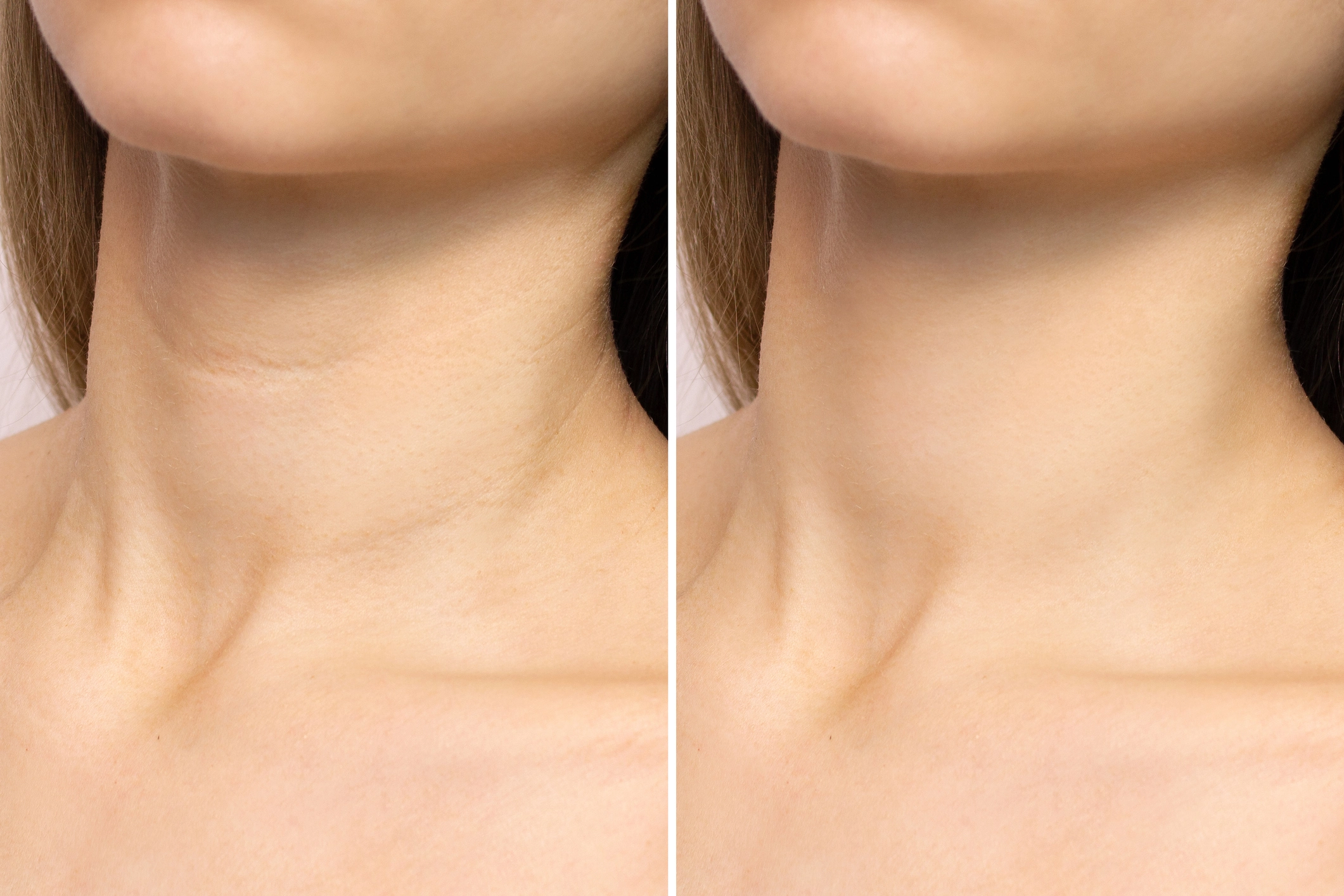
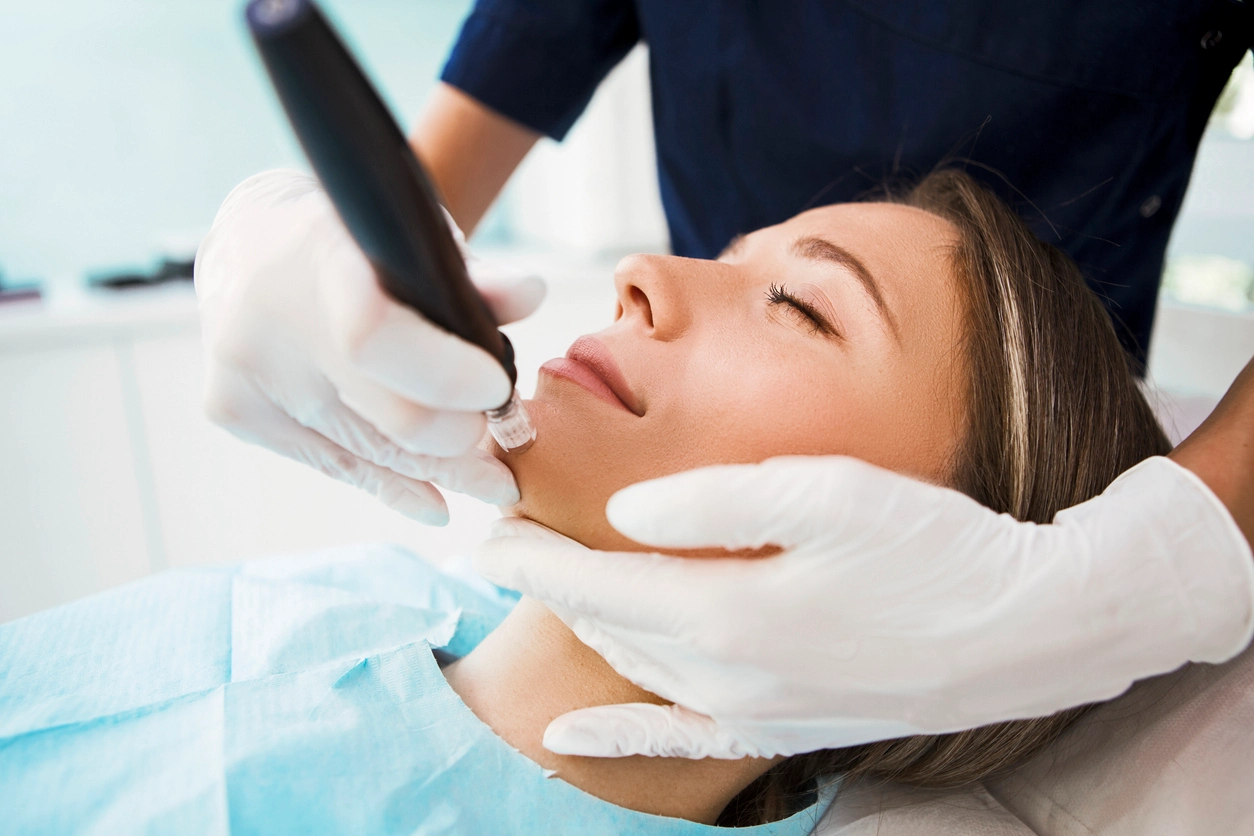
The décolleté — the area spanning the neck, chest, and upper breast — has long been one of the most visible signs of aging and one of the most undertreated areas in aesthetic medicine. That is changing. Radiesse, one of the most established biostimulatory injectables in aesthetics, has received FDA approval for use in the décolleté, giving providers a clinically validated, non-surgical option to address the crepey skin, wrinkles, and volume loss that develop in this area with age and sun exposure.
For patients at Evolve Med Spa, it means a treatment category that has historically been limited to lasers and topicals now has a powerful injectable option with the full backing of regulatory approval.
What Did the FDA Just Approve Radiesse For?
The U.S. Food and Drug Administration has expanded the approved indication for Radiesse (calcium hydroxyapatite, or CaHA) to include rejuvenation of the décolleté. This represents a significant milestone: Radiesse has long been used off-label in the neck and chest area, but the new approval formalizes its use in this region with clinical data supporting both safety and efficacy in décolleté skin.
The approval is specific to the diluted form of Radiesse — a hyperdilute technique in which the product is mixed with saline and lidocaine to create a more fluid consistency that spreads evenly through the superficial tissue layers of the chest, stimulating collagen and elastin rather than creating structured volume.
What Does Radiesse Actually Do to the Décolleté?
Unlike hyaluronic acid fillers, which physically fill and plump an area, Radiesse works as a biostimulator. The calcium hydroxyapatite microspheres in the product are suspended in a gel carrier. Once injected, the carrier provides immediate but temporary smoothing, while the CaHA microspheres stimulate fibroblasts — the cells responsible for producing collagen and elastin — to regenerate new structural tissue in the skin.
For the décolleté specifically, this mechanism is particularly well-suited because:
- The skin in this area is thin and delicate — traditional filler volume is often inappropriate
- Sun damage and aging in the décolleté show as crepey texture and fine lines, not deep volume loss
- Collagen regeneration addresses the root cause of skin laxity rather than masking it
- Results develop gradually and look entirely natural — there is no risk of an overfilled or unnatural appearance
For a broader comparison of biostimulatory approaches versus standard HA fillers, see our guide: Biostimulators vs. Standard HA Fillers: What Is the Difference?
Who Is a Good Candidate for Radiesse in the Décolleté?
Ideal candidates for this treatment are patients who have noticed:
- Crepey or crinkled skin texture across the chest and upper breast
- Fine horizontal lines on the neck and upper chest
- Sun damage-related skin laxity in the décolleté
- A visible mismatch between their face (which may have been treated) and their chest and neck
Patients who are not candidates include those with active skin infections or lesions in the treatment area, those with a history of keloid scarring, and those who are pregnant or breastfeeding. A consultation at Evolve Med Spa will determine whether Radiesse décolleté is appropriate for your skin.
What Does the Radiesse Décolleté Treatment Process Look Like?
The procedure is relatively straightforward and takes approximately 30 to 45 minutes:
- A topical numbing cream is applied to the treatment area 20 to 30 minutes before injection
- Radiesse is hyperdiluted by your provider with saline and lidocaine to the appropriate concentration for superficial skin treatment
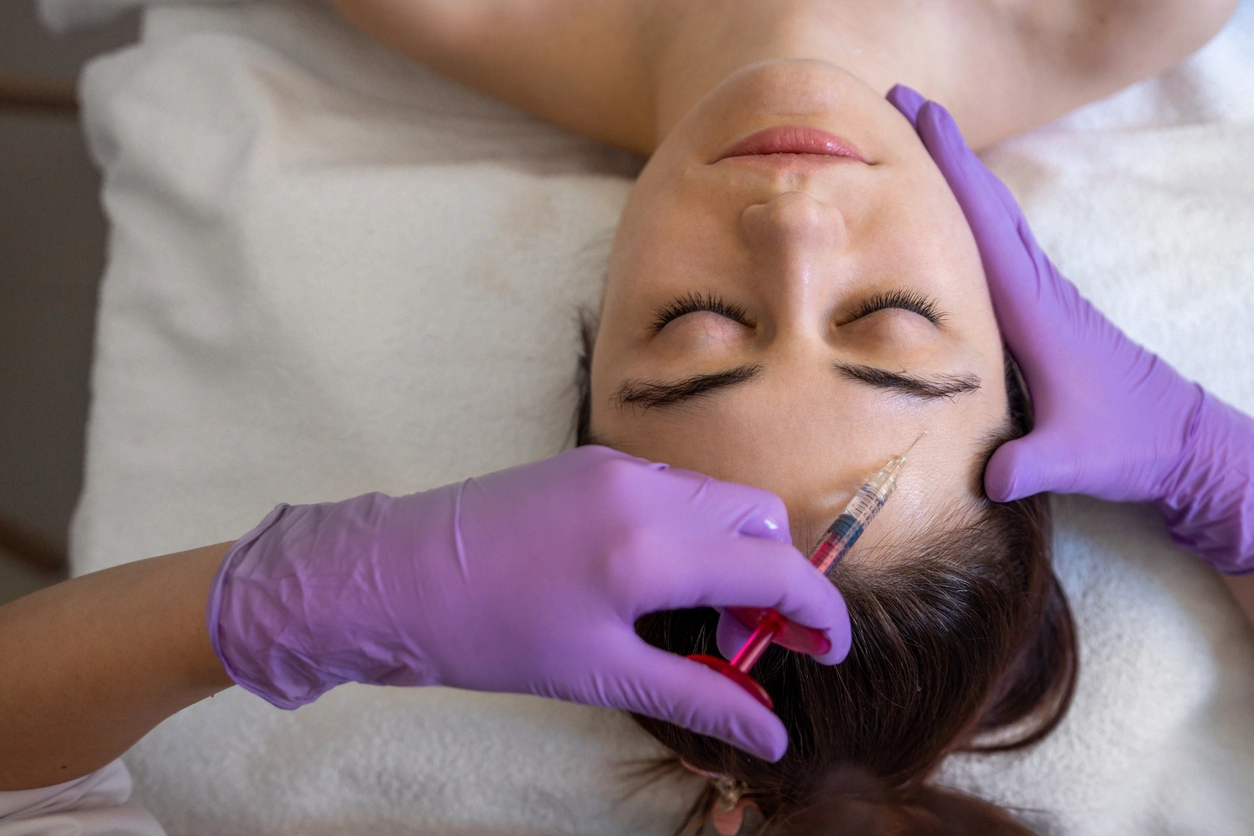
- The product is injected using a series of small injections across the décolleté — providers typically use a fanning or threading technique to ensure even distribution
- Mild swelling and redness at injection sites is normal and typically resolves within 24 to 48 hours
When Do Results Appear and How Long Do They Last?
Because Radiesse works by stimulating collagen production rather than delivering immediate volume, results develop progressively:
- Immediate: temporary smoothing from the gel carrier (fades within 1–2 weeks)
- 4–6 weeks: early collagen stimulation begins to improve skin texture
- 3–6 months: full collagen regeneration produces visible firmness and smoothing
- Longevity: results typically last 12 to 18 months; most patients return for a maintenance treatment annually
For context on how this compares to other skin-tightening approaches in the neck and chest area, see our post on reducing neck lines and effective treatments for a youthful neck.
How Is This Different from Using Radiesse on the Face?
Facial Radiesse is typically used in its standard (non-diluted) concentration to restore structural volume in areas like the cheeks, temples, or jawline. Décolleté Radiesse uses a hyperdilute protocol specifically designed for superficial skin rejuvenation rather than volumetric replacement. The technique, depth of injection, and intended outcome are distinct — which is why the separate FDA approval for the décolleté is clinically meaningful, not just a paperwork formality.
If you're also interested in skin tightening options for the neck and lower face, our post on RF skin tightening treatments covers how energy-based devices can complement injectable biostimulators.
Frequently Asked Questions About Radiesse for the Décolleté
Does Radiesse décolleté hurt?
The treatment is well-tolerated by most patients. Topical numbing is applied before treatment, and the Radiesse formulation includes lidocaine. Most patients describe the injections as mild pressure with minimal discomfort.
Can Radiesse be combined with other décolleté treatments?
Yes. Radiesse can be combined with laser resurfacing, IPL for pigmentation correction, or RF microneedling for patients who want to address multiple aspects of décolleté aging — texture, laxity, and sun damage — in a comprehensive treatment plan. Your provider at Evolve will recommend sequencing based on your priorities.
Is Radiesse reversible?
Unlike hyaluronic acid fillers, Radiesse cannot be dissolved with hyaluronidase. This makes provider selection and correct technique especially important. With proper dilution and injection depth, there is no risk of the lumping or nodule formation associated with standard-concentration Radiesse placed in the wrong tissue plane.
How is Radiesse décolleté different from Sculptra for the chest?
Both are biostimulators, but they use different mechanisms. Radiesse uses CaHA microspheres; Sculptra uses poly-L-lactic acid (PLLA). Both have been used off-label in the décolleté, but Radiesse now carries the specific FDA approval for this indication. Your provider can discuss which biostimulator is better suited for your anatomy and goals.