If you've been searching for under-eye PRP treatments, you've probably seen a mix of before-and-afters, mixed reviews, and a lot of questions about how long results last. It's a treatment that gained real traction in the aesthetics world, and for good reason. Injecting platelet-rich plasma near the tear trough to stimulate collagen and improve the appearance of dark circles made a lot of biological sense.
But the science has moved forward. At Evolve Med Spa, we've transitioned to platelet-rich fibrin (PRF) for under-eye rejuvenation, and the difference isn't just marketing. This post breaks down what made under-eye PRP popular, what PRF does differently, and why the upgrade matters for this particular treatment area.
What Under-Eye PRP Was Trying to Do
The under-eye area, specifically the tear trough, is one of the most challenging zones in aesthetic medicine. The skin here is the thinnest on the face, with almost no subcutaneous fat buffer. When the fat pads beneath begin to shift with age, or when the skin loses collagen and elasticity, you get the classic triad of under-eye concerns:
- Dark circles, partly from pigmentation, partly from shadows caused by hollowing
- Tear trough hollowing, the sunken groove between the lower eyelid and cheek
- Crepey or fine-textured skin, from collagen loss and reduced elasticity
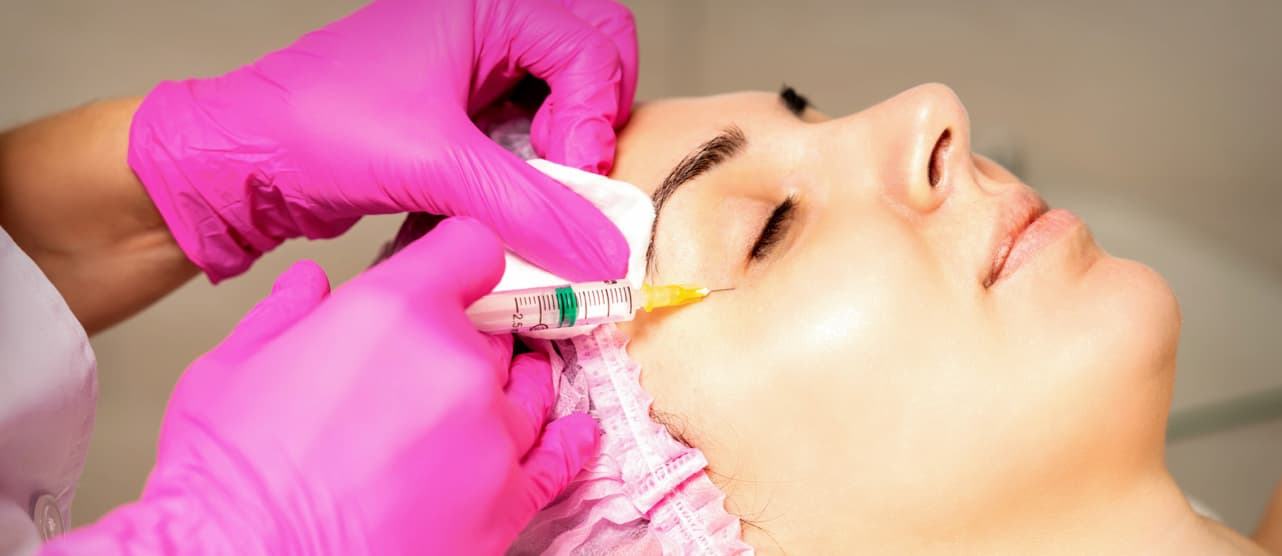
Traditional under-eye PRP worked by drawing a small amount of blood, spinning it in a centrifuge to concentrate platelets, and injecting the resulting plasma into the tear trough and surrounding tissue. The growth factors in the plasma, PDGF, VEGF, TGF-β, would signal the body to produce new collagen and improve local circulation, gradually brightening and thickening the skin.
The logic was sound. The results, for many patients, were real. But the delivery method had meaningful limitations that PRF addresses directly.
How PRF Improves on PRP Under the Eye
PRF is made from the same starting point, your own blood, but it's processed at a lower centrifuge speed and without anticoagulants. That change preserves the fibrin matrix: a natural, three-dimensional protein scaffold that traps platelets, white blood cells, and growth factors together.
What that means practically, especially for the under-eye area:
Slower, more sustained growth factor release
PRP releases its growth factors quickly after injection, a burst that stimulates tissue but dissipates fast. PRF releases growth factors gradually over days to weeks because they're embedded in the fibrin mesh. For a zone like the tear trough, where you want long-term collagen remodeling, that slower release creates a more sustained and cumulative effect.
A gentler injection experience
Because PRF is slightly more viscous than PRP and contains a fibrin scaffold, it integrates more smoothly into the delicate tissue around the eye. Many providers find it moves less after injection, an important consideration in an area where migration could cause uneven results.
PRF EZ Gel: the option PRP never had
For patients with notable hollowing under the eye, not just skin quality concerns, PRF can be thermally activated into a gel form called PRF EZ Gel. This converts the liquid PRF into a soft, cohesive material that provides immediate structural volume while simultaneously releasing growth factors as it's absorbed. It's 100% autologous (your own biology), so there's no risk of allergic reaction or rejection.
PRF EZ Gel for under-eye hollowing gives you two things at once: immediate volume correction and a weeks-long biological stimulus for collagen renewal, something PRP simply couldn't offer.
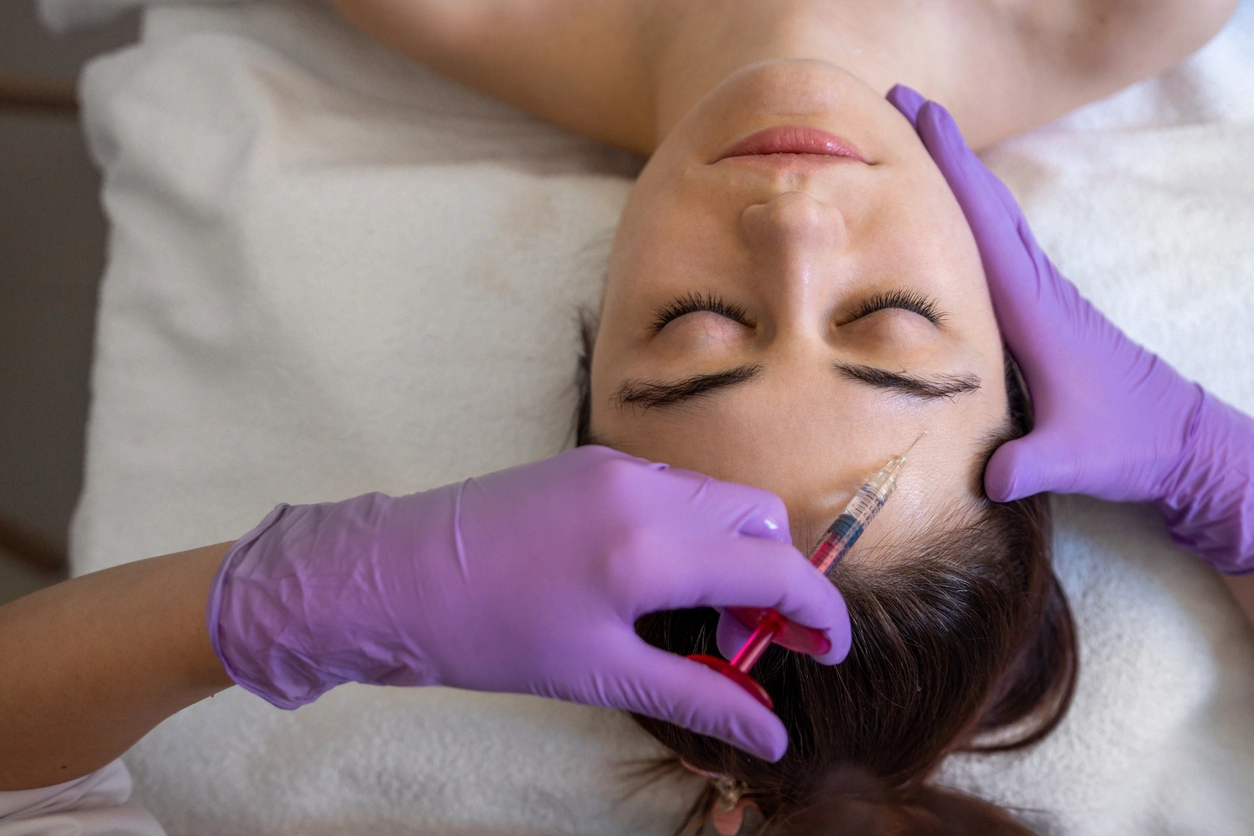
For patients whose primary concern is skin quality, texture, fine lines, dark circles without significant hollowing, Liquid PRF injected into the tear trough and surrounding area remains an excellent option.
What Under-Eye PRF Actually Treats
PRF under-eye treatment at Evolve is appropriate for:
- Dark circles with a vascular or structural (hollowing) component
- Tear trough hollowing and the shadow it creates
- Fine lines and crepey texture in the lower eyelid area
- Loss of volume or skin thickness under the eyes
- Patients wanting a natural, non-synthetic option
It's worth noting that not all dark circles respond equally to any injectable treatment. Pigmentation-based dark circles (often hereditary, more common in deeper skin tones) require different approaches. Your provider will assess whether the darkness under your eyes is primarily structural, vascular, or pigmentation-based, and recommend accordingly.
What to Expect at Your Under-Eye PRF Appointment
The appointment follows the same core process as any PRF treatment. A small blood draw (2 tubes is typically sufficient for under-eye work), then centrifugation while a topical numbing cream is applied to the area.
The injection itself takes 10–20 minutes. The tear trough is a sensitive area, so the numbing step matters, most patients describe a mild pressure sensation rather than sharp discomfort. For EZ Gel, a blunt-tipped micro-cannula is typically used, which significantly reduces bruising risk compared to a sharp needle in this vascular zone.
What to expect after:
- Mild swelling and puffiness under the eye, this is normal and peaks in the first 24–48 hours
- Some bruising is possible, especially with Liquid PRF injections; EZ Gel via cannula tends to bruise less
- The area will feel slightly tender for a few days
- Avoid rubbing or pressing the area for 72 hours
Results Timeline for Under-Eye PRF
This treatment rewards patience, the most meaningful improvements build over weeks, not days.
Liquid PRF (skin quality focus):
- Week 1–2: Injection sites settle; subtle improvement in skin hydration and tone
- Week 3–6: Growth factors actively working, fine lines begin to soften, skin appears thicker
- Month 2–3: Peak collagen remodeling; skin quality improvements most visible
- Best results typically achieved with a series of 2–3 sessions, 4–6 weeks apart
PRF EZ Gel (volume + skin quality):
- Day 1–3: Initial swelling peaks; subtle volume correction visible once swelling settles
- Week 2–4: Gel integrating with tissue; slight softening of initial volume, normal
- Week 5–8: Collagen stimulation producing visible skin quality improvements alongside structural correction
- Month 2–3: Final result, improved under-eye depth, brighter appearance, smoother texture
Results from PRF under-eye treatment are gradual and genuine, not the temporary, "filled" look of synthetic filler. Most patients describe their result as looking refreshed rather than treated.
Is PRF Right for Your Under-Eye Concerns?
PRF under-eye treatment works best for patients who:
- Have mild to moderate tear trough hollowing or under-eye volume loss
- Are bothered by dark circles that worsen with fatigue or dehydration (structural/vascular component)
- Want a natural, autologous treatment with zero synthetic materials
- Are willing to commit to a 2–3 session protocol for optimal results
- Are not currently pregnant or on blood thinners
For a full breakdown of PRF candidacy, safety, and preparation, including what to avoid before your appointment, visit our PRF service page. Your provider will assess your specific anatomy during a consultation and determine whether Liquid PRF, EZ Gel, or a combination approach is the right call for your goals.
Ready to explore PRF for your under-eye concerns? Book a consultation at Evolve Med Spa and we'll walk you through exactly what to expect for your specific goals and anatomy.