The eye area shows aging earlier than almost anywhere else on the face — and it's also one of the more nuanced areas to treat, because different concerns call for completely different approaches. Botox and dermal fillers both address signs of aging around the eyes, but they work differently and treat different problems. Understanding which one applies to your concern is the key to getting a result you'll actually be happy with.
The Core Difference: Relaxing vs. Restoring
Before getting into specific concerns, the foundational rule:
- Botox (and Dysport/Xeomin) — works by relaxing muscles. Best for dynamic wrinkles: lines that form from repeated muscle movement like squinting, smiling, and frowning.
- Dermal fillers — work by restoring volume. Best for hollowing, loss of structural support, and static lines that are visible even at rest.
Most patients have both types of concerns around the eyes, which is why combination treatment is so common. The question isn't always "Botox or filler?" — it's often "where does each one apply?"
How Does Botox Work Around the Eyes?
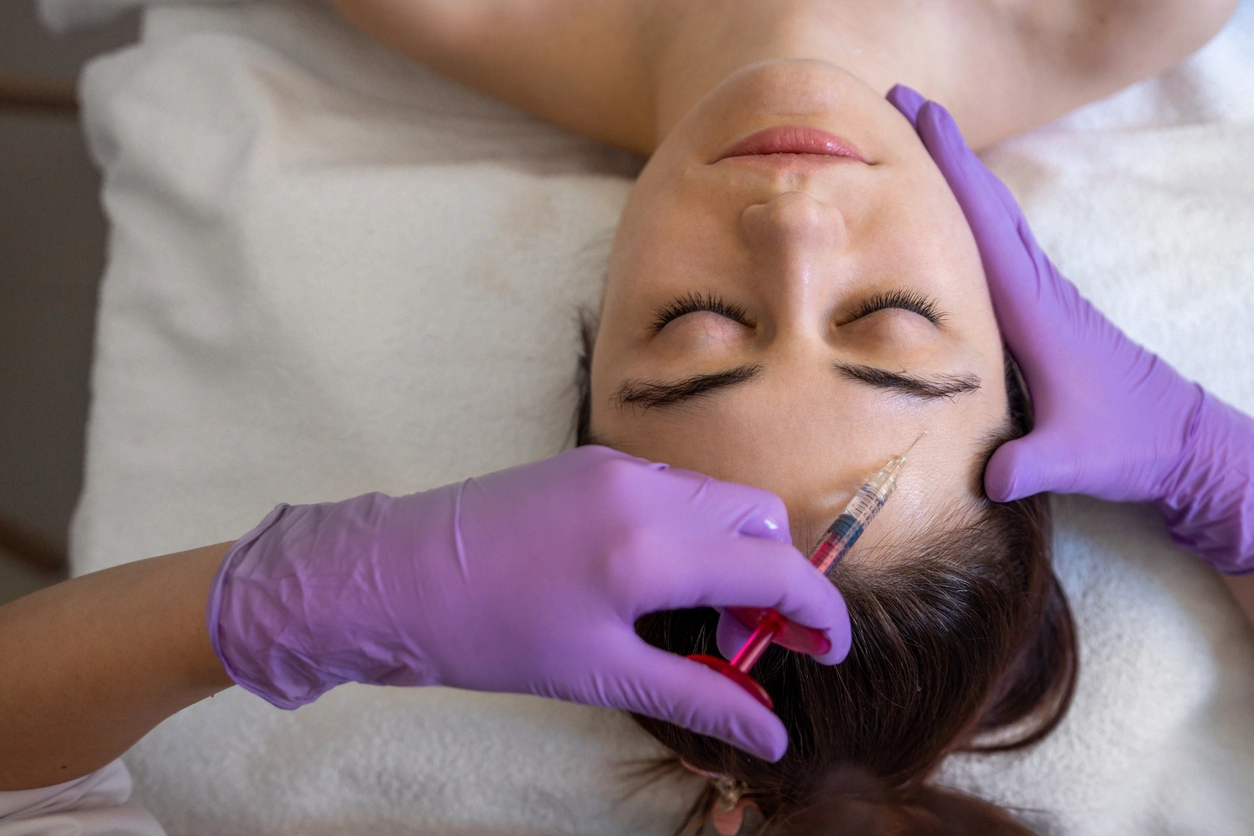
Botox is injected directly into specific muscles to temporarily block the nerve signal that causes contraction. When the muscle relaxes, the skin above it smooths out. Around the eyes, Botox is used for:
Crow's Feet
The orbicularis oculi — the ring-shaped muscle that surrounds the eye — contracts every time you squint, smile, or narrow your eyes. Over years, this creates the fanning wrinkles at the outer corners of the eyes known as crow's feet. Botox placed at 3 injection points per side relaxes the lateral portion of this muscle, smoothing the lines without affecting the natural movement of the eyelid. Crow's feet treatment typically uses 10–12 units per side.
Botox Brow Lift
Strategic Botox placement can elevate the brow by relaxing the muscles that pull it downward (the corrugator, orbicularis oculi, and procerus). When these depressors are relaxed, the frontalis — which lifts the brow — can work more effectively, creating a subtle upward lift that opens the eye area. This is particularly useful for patients with brow hooding who aren't ready for a surgical brow lift.
Glabellar Lines ("11 Lines")
The vertical lines between the eyebrows form from the corrugator and procerus muscles contracting during expressions of concentration or frustration. These are among the most commonly treated areas with Botox — typically 20–25 units placed across 5 injection points. Smoothing these lines makes the overall eye area appear more relaxed and approachable at rest.
Under-Eye Botox (Lower Lid)
A small amount of Botox placed just below the lower lash line can reduce the appearance of fine lines along the lower eyelid and create a mild brightening effect by relaxing the lower portion of the orbicularis oculi. This is a more advanced technique requiring an experienced injector — incorrect placement can cause temporary lower lid weakness.
How Do Dermal Fillers Work Around the Eyes?
Filler is used around the eyes to address volume loss — not muscle movement. The primary application is the tear trough: the crease between the lower eyelid and upper cheek that becomes more prominent with age and volume deflation.
Tear Trough Filler
As the midface fat pads deflate, the junction between the lower eyelid and upper cheek becomes more visible, creating a hollow shadow that makes people look tired or older regardless of how rested they actually are. Filler placed carefully in the tear trough and upper cheek restores the smooth transition between the eyelid and the cheek.
Product choice matters significantly here. The skin under the eye is the thinnest on the face, and some HA fillers have a higher water-absorption ratio that can cause puffiness or the Tyndall effect (a bluish tint visible through thin skin). For this reason, most experienced injectors prefer lower-water-content, cohesive HA fillers for the tear trough — Restylane-L and Belotero Balance are the most commonly used options. Both integrate smoothly at the shallow placement depth this area requires.
For patients exploring non-filler options for the under-eye area — including PRF and PRF EZ Gel — see our full comparison in Fillers vs. PRF for Under Eyes.
Temple Filler
Temporal hollowing — the concavity at the sides of the forehead just above the cheekbone — is closely related to under-eye aging. As the temples deflate, the brow loses structural support and can descend, indirectly deepening the appearance of the upper eyelid. Volumizing filler placed in the temple can restore this lateral support and contribute to a more lifted, open appearance around the eye.
When Should You Choose Botox vs. Filler?
A simple framework:
- Choose Botox if: Your primary concern is lines that appear or deepen during expression — crow's feet that fan when you smile, lines between the brows when you concentrate, or a brow that droops when the muscles are active.
- Choose filler if: Your primary concern is hollowing, shadows, or tired appearance at rest — under-eye hollows that are visible regardless of expression, temples that look sunken, or a tear trough that casts a shadow.
- Consider both if: You have active crow's feet and under-eye hollowing — this is very common and the treatments complement each other well.
A qualified provider will assess both your dynamic (in-motion) and static (at rest) concerns at consultation and recommend the approach that addresses your actual pattern of aging rather than a generic treatment plan.
Can Botox and Filler Be Combined Around the Eyes?
Yes — and combining them is often the most complete approach. Botox and filler treat different mechanisms, so when both are present, using both makes clinical sense.
One additional benefit of combination treatment: Botox can extend the longevity of filler placed in the same area. By reducing muscle movement around the filler, Botox slows the mechanical breakdown that typically degrades HA fillers over time. Patients who combine treatments often find their filler lasts slightly longer than filler placed in an area with full muscle activity.
Who Is a Good Candidate?
- Botox around eyes: Anyone with dynamic wrinkles in the crow's feet, brow, or glabellar area. Preventative Botox is commonly started in the late 20s to early 30s before lines become static.
- Tear trough / under-eye filler: Best for patients with moderate hollowing whose primary concern is the tired appearance at rest; less effective when the main issue is very dark circles caused by pigmentation (rather than shadow from hollowing)
- Not ideal for filler: Patients with significant under-eye bags or lower lid laxity — filler in these cases can worsen the appearance; surgical consultation may be more appropriate
What to Expect at Your Treatment
Both treatments are performed in the same appointment if combined. Botox injections around the eyes typically take 5–10 minutes. Under-eye filler requires more precision and care — expect 20–30 minutes including topical numbing. A cannula (blunt-tip micro-tube) is often used for tear trough placement to minimize bruising in this vascular area.
Botox results develop over 5–7 days. Filler results are immediate, though mild swelling under the eyes is common for 24–72 hours; final appearance settles within a week. Botox around the eyes typically lasts 3–4 months; tear trough filler typically lasts 9–12 months.
Frequently Asked Questions
Is Botox or filler better for under-eye bags?
Neither, in most cases. Under-eye bags are typically caused by herniated fat or lower lid laxity — structural issues that injectable treatments don't address well. Filler can sometimes make bags appear more prominent by adding volume beneath them. If under-eye bags are your primary concern, a surgical consultation for lower blepharoplasty is worth exploring.
How long does under-eye filler last?
Under-eye filler (tear trough) typically lasts 9–12 months with Restylane-L, though some patients find results persist longer. The tear trough is a lower-movement area compared to the lips or mouth, which contributes to filler longevity there.
Can I get Botox and under-eye filler on the same day?
Yes — and many patients do. Both treatments can be performed in a single appointment. Your injector will typically administer Botox first, then filler. There's no interaction between the two, and combining them doesn't extend recovery time.
Will under-eye filler make me look puffy?
Puffiness is possible if too much filler is placed or if the wrong product is used. HA fillers that absorb more water can swell over time in the thin under-eye skin. Experienced injectors avoid this by using low-water-content cohesive gels (Restylane-L, Belotero Balance) placed conservatively. If puffiness does occur, it can be fully reversed with hyaluronidase.
Are there non-filler options for under-eye hollowing?
Yes — PRF (platelet-rich fibrin) and PRF EZ Gel are increasingly popular alternatives that use your body's own growth factors rather than synthetic filler. PRF EZ Gel in particular provides both immediate volume and longer-term collagen stimulation. See our full breakdown in Fillers vs. PRF for Under Eyes: Which Is Right for You?.
────────────────────────────────────────────────────────────
Get the Right Eye Area Treatment at Evolve Med Spa
Botox, filler, PRF — the right approach depends on exactly what's driving your concern. Our providers at Evolve Med Spa assess both the dynamic and structural factors around the eye area at every consultation, so you leave with a treatment plan that actually targets your specific pattern of aging. Book your eye area consultation at Evolve Med Spa.r skilled team specializes in a range of non-surgical injectables and treatments, including Botox and dermal fillers, to address various signs of facial aging, such as eye bags, static wrinkles, crow’s feet, and more.